


Download the article in pdf format
Publication date: 01.09.2023
DOI: 10.24412/2782-6570-2023_02_03_3
UDC 712; 551.58; 796.5
DEVELOPMENT AND SCIENTIFIC JUSTIFICATION OF THE THERAPEUTIC AND RECREATIONAL, LANDSCAPE AND CLIMATIC POTENTIAL OF THE “TROPA KEDROVAYA” TERRAIN CURE PATH IN YUZHNO-SAKHALINSK
Yu.V. Koryagina, N.V. Efimenko, S.V. Nopin, A.P. Tychinina, A.N. Popov
FSBI “North-Caucasian Federal Research-Clinical Center of Federal Medical and Biological Agency”, Essentuki, Russia
Annotation. Scientifically justified, therapeutic and recreational, landscape and climatic potential of the “Tropa Kedrovaya” terrain cure path in Yuzhno-Sakhalinsk was identified. The initial data included results of comprehensive monitoring (bioclimatic, landscape, ecological) of the “Tropa Kedrovaya” terrain cure path, reference materials of long-term (meteorological, heliophysical, ecological) observations on the weather station of Yuzhno-Sakhalinsk. The conducted study has identified landscape and recreational potential of the path located in the “Gornyj Vozdukh” Sports and Tourism Complex according to the modular technology accepted in balneology, the value (2.16 points out of 3) shows its compliance with the highest rank (the first) and characterizes it as favorable. Value of the microbioclimatic potential K(BKP) amounted to 2.24 points out of 3, which corresponds to the gentle effect of microbioclimate on the human body. The route of the “Tropa Kedrovaya” path may be used for health tourism, its landscape and climatic resources – for climate therapy.
Keywords: landscape and climatic potential, terrain cure, ecology, bioclimate, health tourism, recreation, Sakhalin.
Introduction. Effectiveness of health tourism depends on a presence and variability of natural healing resources (landscapes and biological climate), their qualitative and quantitative characteristics and a possibility of comprehensive application in landscape therapy, climate therapy, sport and eco-tourism.
Currently in Russia, due to the shortage of foreign tourist flows, a study and development of new prospective locations with high landscape, climatic and balneological potential to create new resorts, health locations, sports and health centers is of special value [1-2].
From this point of view, an idea to examine the natural landscape and climatic potential of the mountain area in Yuzhno-Sakhalinsk for the development of summer health tourism and recreation gains relevance [3]. The studies have shown [4] that the effectiveness of resort treatment and health tourism depends in many ways on the rank, features of health functions of different bioclimatic modules, a possibility to apply them in many ways for therapeutic purposes, the presence and degree of severity of pathogenic and environmental factors of the surrounding environment, collectively identifying the health potential of the natural environment, which determined the purpose of the study.
The “Gornyj Vozdukh” Sports and Tourism Complex, located in Yuzhno-Sakhalinsk on the Bolshevik (601 m above sea level) and Krasnaya (779 m above sea level) mountains, is the best ski resort of the Far East, winner of the “Leaders of the sports industry” award in the nomination of the “Best ski resort in Russia”. In this regard, it is relevant to develop an infrastructure in this territory also for various summer types of recreational activity, in particular – recreational routes of the terrain cure paths.
The purpose of this study was to develop and scientifically substantiate therapeutic and recreational, landscape and climatic potential of the “Tropa Kedrovaya” terrain cure path in Yuzhno-Sakhalinsk.
The work was carried out according to the contract No 43-23 dated February 22, 2023 with the “Gornyj Vozdukh” Sports and Tourism Complex to perform a study work titled “Estimation of the landscape and climatic potential of the recreational routes located in the “Gornyj Vozdukh” Complex of the Sakhalinsk Oblast”.
Methods and organization. The research materials included the results of comprehensive monitoring (bioclimatic, landscape, ecological) of the “Tropa Kedrovaya” terrain cure path; reference materials of long-term (meteorological, heliophysical, ecological) observations on the weather station of Yuzhno-Sakhalinsk and guiding documents, SNiPs, GOSTs, state reports and scientific articles.
The study also included route observation (bioclimatic, landscape, ecological) of the “Tropa Kedrovaya” terrain cure path, comprehensive methods and estimation models of climate and landscapes for balneological and health tourism reasons [5-11], math and analytic techniques of evaluating the landscape and climatic potential (LCP).
The observation procedure of the “Tropa Kedrovaya” path was carried out from June 13 to 24, 2023. The procedure included measurements of positively and negatively charged light air ions (with mobility of K>0,5 cm2/(V•s)), the number of aerosol particles of various dimensional gradations (8 gradations in the range of 0.2 to 10 µm) in the surface atmosphere at the height of human breathing of 1.5 m, identification of air temperature and humidity, ambient dose equivalent rate (ADER) of gamma radiation, estimation of orography, flora, and natural panoramas [10].
The LCP evaluation was carried out with a comprehensive method of modular analysis of the balneological significance of landscape elements (geography, flora, water bodies, their landscape and aesthetic quality), bioclimate (meteorological, radiation, circulation, ionization), ecological state of the natural environment with the identification of categories of their suitability for the health tourism purposes according to the standards accepted in balneology [10].
The following devices were used: MAC-01 light-sized air ion counter (State Register of measuring instrumentsNo 20429-11), RadiaSkan-801 radiation dosimeter (State Register of measuring instruments No 69478-17), SAChM 4801-01 aerosol analyzer, a mobile version (State Register of measuring instruments No 676936-19-19), DT-1309 light meter, IKV-8 air quality monitor (State Register of measuring instruments No 71394-18), Polar V800 heart rate monitor.
Results and discussion. According to the observational data, five sample areas (SA) / terrain cure stations were identified on the path for the aforementioned comprehensive observations, according to the materials of which we have developed suggestions on their rational application in health tourism. Length of the “Tropa Kedrovaya” path is 3450 m, height difference – 524 m, maximum surface grade of the route – 24°. The route’s configuration is presented with the corresponding SA coordinates in the table 1, graphically – on the figure 1, where the SA locations with different landscape and climatic conditions are indicated.
The path starts in the Valley of Tourists on the north-western slope of Krasnaya in the area of the lower cable car station and stretches up the slope.
The landscape and climatic potential of the “Tropa Kedrovaya” path is based on orographic features of mountains’, water bodies’ locations, as well as the local flora.
Microbioclimatic features on the territory of the terrain cure path are presented in table 2, which indicates the absence of a sharp variability of hygrothermal indices.
Table 1
Reconnaissance sketch of the “Tropa Kedrovaya” terrain cure path
|
SA No |
Location description |
Northern latitude, ° |
Eastern latitude, ° |
Height above sea level, m |
Physiological expenditure, |
|
SA-1 |
The path’s beginning in the Valley of Tourists |
46.942327 |
142.805960 |
232 |
0 |
|
SA-2 |
Turn on the serpentine |
46.945945 |
142.811007 |
309 |
133 |
|
SA-3 |
Location on the |
46.944093 |
142.816590 |
464 |
448 |
|
SA-4 |
Gabions and springs |
46.941714 |
142.827744 |
630 |
781 |
|
SA-5 |
Upper cable car station |
46.934848 |
142.831790 |
756 |
1022 |
Note: SA – sample area/terrain cure station; * – the calculation of energy consumption was identified while walking at an average speed of 2.4 km/h according to the pulse of a man aged 45 years, 85 kg
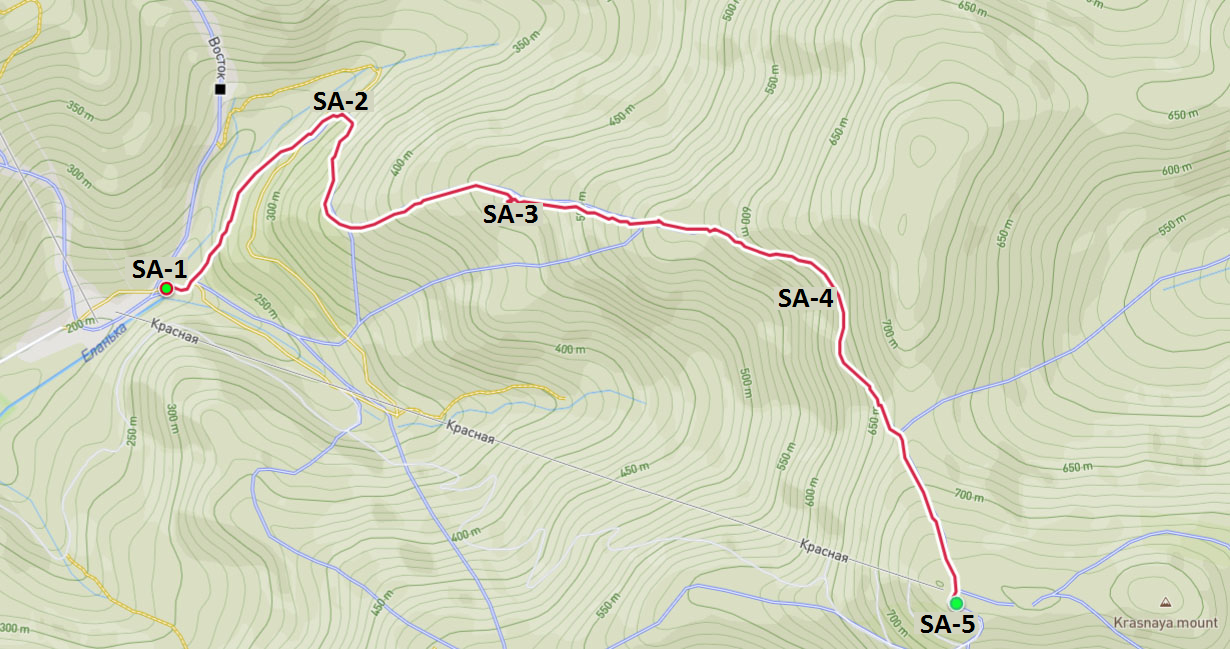
Fig. 1. The sample areas’ scheme of “Tropa Kedrovaya” terrain cure path
Note: SA – sample area/terrain cure station
Table 2
Values of the microbioclimatic modules on the “Tropa Kedrovaya” terrain cure path
|
SA No |
Microbioclimate indices |
||||||
|
Т, °С |
RH, % |
AP, hPa |
О2, % |
СО2, ppm |
∑[(N-)+(N+)] /IUC, |
O/T, klx |
|
|
SA-1 |
20.0 |
63.5 |
981 |
20.7 |
430 |
850/0.7 |
23.7/5.7 |
|
SA-2 |
16.4 |
64.6 |
973 |
20.8 |
419 |
1610/0.66 |
23.7/12 |
|
SA-3 |
24.1 |
52.6 |
956 |
21.2 |
415 |
1380/0.75 |
23.7/5.2 |
|
SA-4 |
23.7 |
41.2 |
937 |
21.1 |
385 |
1440/0.67 |
23.5/ns |
|
SA-5 |
21.7 |
44.9 |
923 |
21.0 |
390 |
1260/1 |
23.4/ns |
Note: SA – sample area/terrain cure station; Т, °С – air temperature; RH, % – relative humidity; О2, % – relative oxygen content in the air; СО2, ppm – carbon dioxide content, units/million in the air; AP, hPa – air pressure; ∑[(-) + (+)] / IUC – air ionization background on the SA, ion/cm3; О/T – illuminance (klx), in the open (О), and under the tree crown (T); IUC – ion unipolarity coefficient; ns – no shadow
One of the main health functions of microbioclimate of the path’s territory is a high level of air ionization of the surface atmosphere (∑ 850-1610 ion/cm3) with a low IUC (0.66-1), which demonstrates enhanced health properties of the surface atmosphere.
During the study, relative oxygen content on the path amounted to 20.7-21.2% relative to the standard values of 21%. Carbon dioxide content was 385-430 ppm (particles/million). This indicator was below the permissible level of 450 ppm for an open area, which characterized the air throughout the entire length of the path as clean and fresh (fig. 2).
Another important index reflecting cleanness of the air is the level of aerosol particles of the surface atmosphere in the range of 0.2 to 10 µm. The values of this index varied from 10605 (near SA-4 in the area of the upper cable car station) to 108088 (in the Valley of Tourists at the lower cable car station) particles/l. The lowest values (5724 particles/l) were recorded at the top of Krasnaya at an altitude of 780 m above sea level, 200 meters from the upper
cable car station (fig. 3).
The level of biologically significant aerosol in a particle range from 0.5 to 1 µm did not exceed the norm on the most part of the “Tropa Kedrovaya” path. The excess was recorded in the Valley of Tourists in the area of the lower cable car station, where the main part of the territory is covered with gravel and allocated for ski slopes. The lowest value of ultrafine aerosol (485 particles/l) was recorded in the area of SA-5 at the top of Krasnaya, near the upper cable car station (fig. 4).
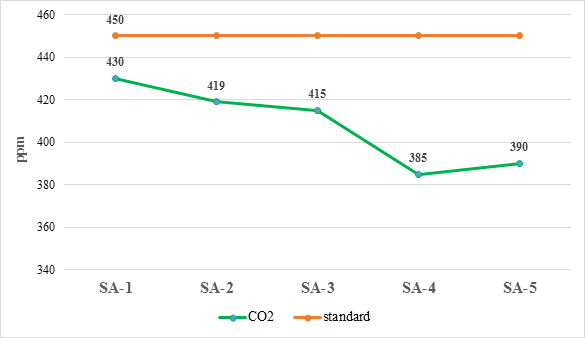
Fig. 2. Relevant СО2 content in the air on the “Tropa Kedrovaya” path
Note: SA – sample area/terrain cure station
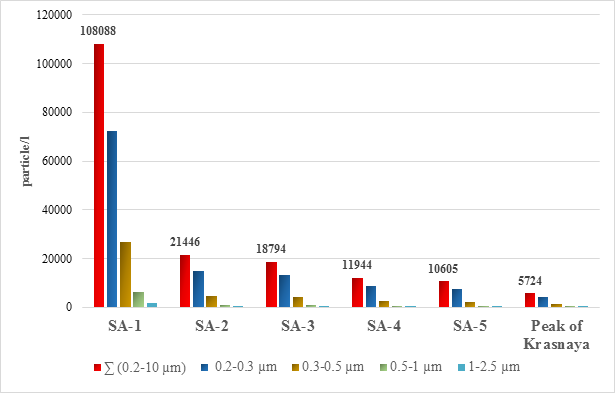
Fig. 3. Aerosol pollution of the surface atmosphere with particles of different sizes on the “Tropa Kedrovaya” terrain cure path
Note: SA – sample area/terrain cure station
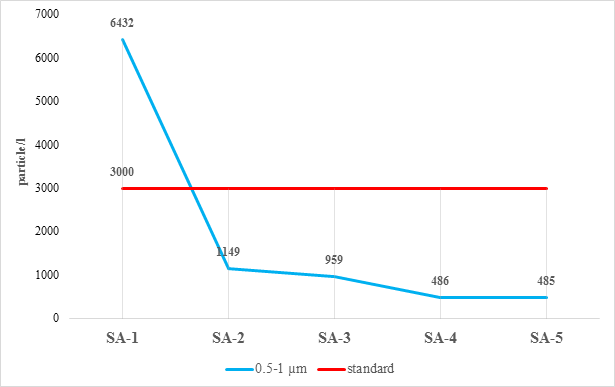
Fig. 4. Aerosol pollution of the surface atmosphere with 0.5-1 µm particleson the “Tropa Kedrovaya” terrain cure path
Note: SA – sample area/terrain cure station
One of the main resort and tourist significant elements of the path’s landscape is the abundant fauna (fig. 5), presented by following coniferous trees: Sakhalin fir, Jezo spruce, larch, Siberian dwarf pine that is occasionally encountered on the path; broad-leaved trees, such as Erman's birch, Manchurian alder, mountain ash, willow, elder-tree etc. [12-14].
The path’s territory as a whole has a favorable complex of plant communities that have therapeutic, environment-forming functions with the nutritional and medicinal gifts of nature [15].
Another important function of the forest on the terrain cure path is a presence of volatile organic compounds (VOC) in the surface atmosphere that possess therapeutic and health properties. VOC have a positive effect on the blood circulating system. For example, when inhaling volatile phytoncides of coniferous trees, the resistance of erythrocytes to a lack of oxygen increases, which almost doubles their life span. Volatile phytoncides also influence physical and chemical composition of air. They contribute to an increase of negative ion concentration in the air and reduce concentration of positive ones. Phytoncides ionize air oxygen, stimulating its biological activity. Moreover, they improve the efficiency and economy of the cell’s energy, contribute to the settling of dust particles. Landscape resources of the plants in this natural zone reflect great prospect of developing natural air and phytotherapy in case of the proper arrangement of paths and design of the territory [16].
Elements of the landscape and recreational potential of the area with an estimation of their resort and tourist significance on the “Tropa Kedrovaya” terrain cure path (according to 25 modules) are presented in table 3.
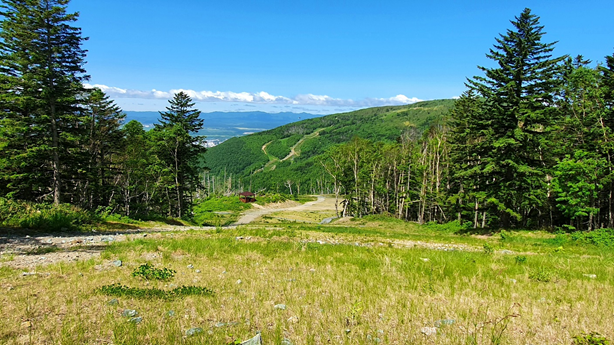
Fig. 5. View on the “Tropa Kedrovaya” terrain cure path
Table 3
Balneological assessment of landscape modules on the “Tropa Kedrovaya” terrain cure path
|
No |
Landscape parameters |
Characteristics |
Category of suitability for resort and recreational use |
Score, points |
|||
|
1. Location’s orography modules |
|||||||
|
1 |
Orography |
Steep slope (less than 24о) in a low-mountain area |
Relatively |
1 |
|||
|
2 |
Exposure of slopes, rumba |
The slope of Krasnaya and other picturesque slopes of |
Very favorable |
3 |
|||
|
3 |
Height above sea level, m |
232 to 756 |
Favorable |
2 |
|||
|
4 |
The path’s slope, ° |
Average – 7.8°, |
Favorable |
2 |
|||
|
5 |
Distance from the part to the nearest public asphalt road, m |
~370 |
Favorable |
2 |
|||
|
6 |
The variation degree of the natural underlying surface |
On the main part of the path, the underlying surface is artificial soil |
Favorable |
2 |
|||
|
Total score (12/6) |
2.0 |
||||||
|
2. Location’s fauna modules |
|||||||
|
1 |
Forest stand |
Mixed coniferous and broad-leaved trees, mainly coniferous trees of the II-III class |
Very favorable |
3 |
|||
|
2 |
Crop density |
On separate timbered areas – 0.6-0.8 |
Very favorable |
3 |
|||
|
3 |
Bonitet, class |
All tree bonities were registered in coniferous and deciduous |
Favorable |
2 |
|||
|
4 |
Density of undergrowth, |
Dense forest, |
Favorable |
2 |
|||
|
5 |
Ratio of shadow and open spaces on the path’s routes, % |
20:80 |
Favorable |
2 |
|||
|
6 |
Proportion of green |
More than 60 |
Very favorable |
3 |
|||
|
7 |
Clutteriness |
No fallen trees |
Very favorable |
3 |
|||
|
Total score (18/7) |
2.6 |
||||||
|
3. Attractive views of natural panoramas |
|||||||
|
1 |
Contrast of borders |
High variability of landscape |
Very favorable |
3,0 |
|||
|
2 |
The colorfulness of mountain panoramas |
Pronounced |
Very favorable |
3,0 |
|||
|
3 |
The degree of diversity of the approximate |
High |
Very favorable |
3,0 |
|||
|
Total score (9/3) |
3.0 |
||||||
|
4. Modules of soil quality and the underlying terrain surface |
|||||||
|
1 |
Soil types |
Mountain brown-taiga nonpodzolized and weakly podzolized matted soils, mountain-forest brown soils with a small thickness of the humic horizon; in some places they are characterized by the development of gleization, |
Favorable |
2 |
|||
|
2 |
Soil humidity |
On most of the path – dry |
Relatively |
1 |
|||
|
3 |
Swamp percentage, % |
~1 |
Very favorable |
3 |
|||
|
4 |
Landslides |
1-3% |
Relatively |
1 |
|||
|
5 |
Seismicity |
8-9 |
Relatively |
1 |
|||
|
6 |
Karst |
None |
Very favorable |
3 |
|||
|
7 |
The number of one-time visitors on the path’s territory, people/ha |
0-1 |
Very favorable |
3 |
|||
|
8 |
Degree of preservation of the underlying surface |
The soil periodically shifts on the surface |
Relatively |
1 |
|||
|
Total score (15/8) |
1.88 |
||||||
|
5. Heat and moisture availability of vegetation cover |
|||||||
|
1 |
G.T. Selyaninov hydrothermal coefficient (HTC) |
1,3 – slightly arid |
Favorable |
2 |
|||
|
Comprehensive LCP assessment |
=∑K1+……+ К25/25= ∑54/25=2.16 |
Favorable |
|||||
|
Landscape rank |
1 |
High |
|||||
The microbioclimatic potential of the “Tropa Kedrovaya” terrain cure path occurs under effect of the main climate forming factors: atmospheric circulation, solar radiation, environmental features of the territory.
Following favorable microbioclimatic features of the territory were found: relatively gentle hygrothermic mode, high purity of the surface atmosphere, the presence of preventive, biologically active ultraviolet solar radiation (with a wavelength of 290-315 nm), an increased level of natural air ionization, a long period with favorable outdoor conditions – 239 days a year (table 4).
Table 4
Microbioclimatic potential of the “Tropa Kedrovaya” terrain cure path
|
No |
Microbioclimatic modules |
Value |
Category of the medical and climatic conditions |
Score, points |
|
1. Microbioclimatic modules (К1/n = 35/16 = 2.19 points) |
||||
|
1 |
The number of days in a year with comfort, a weak subcomfort for outdoor walks (for sick and weakened people) |
76 |
Sparingly training |
2 |
|
2 |
Summer period (EET>15 c.d.), days |
44 |
Training |
1 |
|
3 |
Cold period (EET<0 c.d.), days |
154 |
Especially favorable for winter sports |
3 |
|
4 |
The number of days in a year with favorable outdoor weather for summer and winter recreation (if ET>-10 c.d. and the weather |
239 |
Sparing |
3 |
|
5 |
Frost-free period, days |
126 (102 to 160) |
Sparingly training |
2 |
|
6 |
The number of days in a year with a stable snow cover, days per year |
150 |
Especially favorable for winter sports |
3 |
|
7 |
The number of days in a year with a hot supercomfort day |
10 |
Especially favorable |
3 |
|
8 |
Average monthly air temperature in January, °C |
-13.7 |
Sparing |
3 |
|
9 |
Average monthly air temperature in July, °C |
16.8 |
Sparing |
2 |
|
10 |
Average annual air temperature, °C |
2.2 |
Training |
1 |
|
11 |
Absolute maximum of air temperature, °C |
+34 |
Sparingly training |
2 |
|
12 |
Absolute minimum of air |
-36 |
Training |
1 |
|
13 |
Snowstorm, days per year |
32 |
Sparingly training |
2 |
|
14 |
Rain days per year ≥ 1 mm for a year |
101 |
Sparingly training |
2 |
|
15 |
Days with thunderstorm per year |
7 |
Sparing |
3 |
|
16 |
Days with mist per year |
62 |
Sparingly training |
2 |
|
2. Sun radiation modules (К2/n = 21/9 = 2.33 points) |
||||
|
1 |
Hours of sunshine per year |
1870-1933 |
Sparingly training |
2 |
|
2 |
Sunny day average duration, hours |
6.1 |
Sparingly training |
2 |
|
3 |
Amount of solar per year, kWh/m2 |
1248.8 |
Sparingly training |
2 |
|
4 |
The gradation of the biological |
0.5-1 |
Sparing |
3 |
|
5 |
Hours of sunshine in July |
156 |
Sparing |
3 |
|
6 |
Hours of sunshine in December |
122 |
Sparingly training |
2 |
|
7 |
Number of sunless days per year |
59 |
Sparingly training |
2 |
|
8 |
Number of sunless days in July |
7 |
Sparingly training |
2 |
|
9 |
Number of sunless days |
6 |
Sparingly training |
3 |
|
3. Circulation modules (К3/n =10/5 = 2.0 points) |
||||
|
1 |
Number of cyclones per year |
50 |
Sparingly training |
2 |
|
2 |
Wind force: the number of days per year with a wind speed of 15 m/s or more |
20 |
Training |
1 |
|
3 |
Average wind speed in summer, m/s |
3,2 |
Sparing |
3 |
|
4 |
Average wind speed in winter, m/s |
3,5 |
Sparing |
3 |
|
5 |
Maximum wind gust, m/s |
40 (18-40) |
Training |
1 |
|
4. Air humidity modules (К4/n = 11/5 = 2.2 points) |
||||
|
1 |
Repetition rate of relative humidity values below 30%, days per year |
7 |
Sparing |
3 |
|
2 |
Repetition rate of relative humidity values at noon above 80%, days per year |
97 |
Sparingly training |
2 |
|
3 |
Average monthly relative air |
79 |
Sparingly training |
2 |
|
4 |
Average monthly relative air |
77 |
Sparingly training |
2 |
|
5 |
Repetition rate of weather with the “sultriness” phenomena |
3% |
Sparingly training |
2 |
|
5. Air ionization modules (К1/n = 6/2 = 3.0 points) – unique conditions |
||||
|
1 |
Level of negatively charged light oxygen ions (N-), ion/cm3 (according to the summer data) |
850-1610 |
Sparing |
3 |
|
2 |
Ion unipolarity coefficient (IUC) |
0.66-1.0 |
Sparing |
3 |
|
Results: |
||||
|
К(BKP)=∑K1+……+ К37 = 83/37 = 2.24 points |
||||
Note: EET – equivalent-effective temperature; ET – effective temperature; RET – radiation-effective temperature
Therefore, the microbioclimatic potential index (K(BKP)) scored 2.24 points out of 3, which conditionally corresponds with a sparing microbioclimatic effect on a human body and favorable conditions for health tourism, as well as increased potential possibilities of the examined location for climate therapy arrangement (air cure and solar treatment, prevention of UV insufficiency, staying outdoors for a long time, natural air, ion and phytotherapy).
Conclusion. Natural objects and conditions, climate properties of the “Tropa Kedrovaya” terrain cure path may be used for sport tourism, disease prevention and recreation organization.
Landscape and climatic resources of the Susunai ridge slopes and its separate parts (Krasnaya) may degrade and need protection.
In order to fully implement the potential of these natural resources for the purposes of health improvement of the population, it is necessary to justify their use in the field of resort medicine, recreational tourism and sports.
After the comprehensive monitoring procedure and creation of the bioclimatic profile of the “Tropa Kedrovaya” terrain cure path, we have prepared a list of improving measures: installation of signs that will help tourists navigate along the route, with a distance from the beginning to the end of the path; mesh floors to protect visitors and the path from falling stones and soil; creation of separate comfortable recreation areas on the path with hammocks, benches and other infrastructure, including trash bins.
In order to use landscape and climatic resources of the “Tropa Kedrovaya” path accordingly, following activities are recommended for tourists:
- slow walking along the terrain cure path with solar insolation of exposed parts of the body (5-10 minutes) in order to prevent UV insufficiency;
- solar treatment in recreational areas on the route: usually with a small (hygienically recommended) solar insolation dose (1/8-1/4 of a biodose);
- recuperation at rest in the shade of coniferous and broad-leaved plants for 5-10 minutes (natural air, ion and phytotherapy);
- long-term recuperation at rest or sleep in the shade of coniferous and broad-leaved plants;
In the period of the year with temperature above 10 °C walk training sessions should take place 2-3 times every week for 1 month, then 1-2 times a week for 1 month, then the above mentioned steps are repeated. If the body has a good ability to withstand physical loads, it can be increased (e.g. change the sparing mode to the sparingly training mode). During the period of the year with negative air temperatures, it is advisable to switch to winter types of physical training (e.g. skiing).
- sports training with the use of mountain terrain cure path;
- landscape relaxation with the psycho-emotional impact of the natural beauty of mountain panoramas.
Conflict of interest. The authors declare no conflict of interest.
REFERENCES
- Federal law No. 26 dated 23.02.1995. “About natural healing resources, health areas and resorts”. (in Russ.)
- GOST 17.8.1.02-88. Interstate standard. Nature protection. Landscapes. Classification. Nature protection. Earth. Collection of GOSTs. Moscow: Izdatel’stvo standartov, 2002. (in Russ.)
- Koryagina Yu.V., Povolotskaya N.P., Nopin S.V., Ter-Akopov G.N., Popov A.N. Landscape and climatic potential of the health route of the “Detskaya tropa” terrain cure walking path in Yuzhno-Sakhalinsk. Modern Issues of Biomedicine, 2022, vol. 6, no. 3. DOI: 10.51871/2588-0500_2022_06_03_31.(in Russ.)
- Efimenko N.V., Zherlitsina L.I., Povolotskaya N.P. et al. Systematic approach to the use of heliogeophysical factors in preparation of medical weather forecasts for federal resorts of Caucasian Mineral Waters. XIII International Crimea Conference “Cosmos and biosphere”. Simferopol: ARIAL, 2019. pp. 64-67. (in Russ.)
- Efimenko N.V., Povolotskaya N.P., Kajsinova A.S. et al. Method of resort assessment of forest landscapes of mountain territories for the purposes of climate and landscape therapy in resort treatment
of the contingent to be serviced by the FMBA of Russia: manual for physicians. Approved by the Deputy Head of the FMBA V.B. Khavkina 12.2015. Registration number: 82-15. Pyatigorsk: Pyatigorsk State Research Institute of Balneology of the FMBA of Russia, 2015. 26 p. (in Russ.) - Povolotskaya N.P. Weather classification and assessment of thermal comfort during climate therapy and recreation in the CMW. Issues of medical climatology and climate therapy of patients in Pyatigorsk: Pyatigorsk State Research Institute of Balneology and Physiology, 1975. pp. 16-23. (in Russ.)
- Balneology of the Caucasian Mineral Waters: scientific work. Under the editorship of V.V. Ujba. Pyatigorsk: Pyatigorsk State Research Institute of Balneology of the FMBA of Russia, 2011. 368 p. (in Russ.)
- Mikhajlenko V.I., Mikhajlenko A.V., Povolotskaya N.P. et al. Natural resource potential of territory and environmental management: regional aspects. Learning guide. Pyatigorsk: SevKav-GTU, RIA-KMV, 2007. 320 p. (in Russ.)
- Granberg I.G., Povolotskaya N.P., Golitsyn G.S. et al. Medical weather forecasting system in federal resorts of the Caucasian Mineral Waters: methodological guidelines. Pyatigorsk: Pyatigorsk State Research Institute of Balneology of the FMBA of Russia, Obukhov Institute of Atmospheric Physics of the Russian Academy of Sciences, 2009. 23 p. (in Russ.)
- Povolotskaya N.P., Slepykh V.V., Zherlitsina L.I. et al. Method for assessing landscape and climatic potential of resorts and health locations: methodological guidelines of the FMBA of Russia No. 13. Pyatigorsk: FMBA of Russia, FSBI “North-Caucasian Federal Research-Clinical Center of Federal Medical and Biological Agency”, 39 p. (in Russ.)
- Health of the Russia’s population: environmental influence in conditions of climate change. Collective monograph, under the editorship of A.I. Grigor’ev. Moscow: Nauka, 2014. pp. 355-370. (in Russ.)
- Report on the state and environmental protection of the Sakhalin Oblast in 2020. Ministry of Ecology of the Sakhalin Oblast. Yuzhno-Sakhalinsk: LLC “Eikon”, 2021. 179 p. (in Russ.)
- State Report “On the state of sanitary and epidemiological welfare of the population of Sakhalin Oblast in 2021”. Yuzhno-Sakhalinsk: Sakhalin Oblast Department of Rospotrebnadzor, 2022. 198 p. (in Russ.)
- State Report “On the state of protection of the population and territories of the Russian Federation from emergency situations natural and man-made nature in 2020”. Moscow: Ministry of Emergency Situations of Russia, 2021. 264 p. (in Russ.)
- Nikolaev V.A. Landscape science. Moscow: Moscow State University, 2000. 94 p. (in Russ.)
- Handbook on physical geography of the Sakhalin Oblast. Yuzhno-Sakhalinsk: Sakhalin Book Publishing House, 2003. 112 p. (in Russ.)
INFORMATION ABOUT THE AUTHORS:
Yulia Vladislavovna Koryagina – Doctor of Biological Sciences, Professor, Head of the Center of Biomedical Technologies, FSBI “North-Caucasian Federal Research-Clinical Center of Federal Medical and Biological Agency”, Essentuki, e-mail:
Natal’ya Viktorovna Efimenko – Doctor of Medical Sciences, Professor, Deputy General Director for Research, Education and Personnel Policy, FSBI “North-Caucasian Federal Research-Clinical Center of Federal Medical and Biological Agency”, Essentuki, e-mail:
Sergej Viktorovich Nopin – Candidate of Technical Sciences, Leading Researcher of the Center of Biomedical Technologies, FSBI “North-Caucasian Federal Research-Clinical Center of Federal Medical and Biological Agency”, Essentuki, e-mail:
Aleksandra Petrovna Tychinina – Researcher of the Center of Biomedical Technologies, FSBI “North-Caucasian Federal Research-Clinical Center of Federal Medical and Biological Agency”, Essentuki, e-mail:
Aleksandr Nikolaevich Popov – Junior Researcher of the Center of Biomedical Technologies, FSBI “North-Caucasian Federal Research-Clinical Center of Federal Medical and Biological Agency”, Essentuki, e-mail:
For citation: Koryagina Yu.V., Efimenko N.V., Nopin S.V., Tychinina A.P., Popov A.N. Development and scientific justification of the therapeutic and recreational, landscape and climatic potential of the “Tropa Kedrovaya” terrain cure path in Yuzhno-Sakhalinsk. Russian Journal of Sports Science: Medicine, Physiology, Training, 2023, vol. 2, no. 3. DOI: 10.24412/2782-6570-2023_02_03_3