


Download the article in pdf format
Publication date: 01.03.2024
DOI: 10.24412/2782-6570_2024_03_01_4
UDC 796; 615.835.3; 578.834.1
EFFECTS OF HYPEROXIC INHALATION IN ATHLETES WITH AEROBIC AND ANAEROBIC LACTATE MECHANISMS OF ENERGY SUPPLY OF MUSCLE ACTIVITY, WHO HAD COVID-19, DURING TRAINING IN MIDDLE ALTITUDE CONDITIONS
Yu.V. Kushnareva, G.N. Ter-Akopov, S.M. Abutalimova
FSBI “North-Caucasian Federal Research and Clinical Center of the Federal Medical and Biological Agency”, Essentuki, Russia
Abstract. Aim of the study – to evaluate an effect of a hyperoxic inhalation course on the oxygen transport system of athletes with aerobic and anaerobic lactate mechanisms of energy supply of muscle activity, who previously had COVID-19, when performing intense training loads in middle altitude conditions. The study included 54 qualified athletes (Candidate for Master of Sports, Master of Sports of International Class), among which 24 male and 30 female athletes. 25 of them had COVID-19. The inhalation course that consisted of not less than 7 procedures, had a positive effect on the oxygen transport system of all athletes regardless of the predominant energy supply mechanism during training camps in middle altitude, including athletes, who had COVID-19. Athletes with the anaerobic lactate mechanism especially need additional support with hyperoxic mixture due to the specificity of their training and competitive activity.
Keywords: hyperoxic mixture, middle altitude, athletes, COVID-19, mechanisms of energy supply of muscle activity, oxygen transport system.
Introduction. Preparation of athletes in hypoxic conditions of middle altitude is widely practiced in elite sports. Most scientists consider middle altitude as a zone of 800-1000 to 2500 m above sea level, the main feature of which are functional changes in a body in case of moderate activity. Adaptation of a body to altitude hypoxia is a complicated process, which causes alterations from the cardiovascular, hematopoietic, external respiration and gas exchange systems. This is the reason why mountain training is practiced as a measure for improving functional capabilities of athletes and their performance in all sports [1-2]. In case of training athletes, who previously had COVID-19 and started training in middle altitude conditions, it is important to note that in intense activity they may have lowered parameters of blood oxygen saturation, even though the morphological nature of such signs is not identified. These signs may serve as consequence of both disturbed diffusion capacity of the lungs and increased bronchial reactivity [3]. Therefore, altitude hypoxia may be connected with a certain risk for athletes, who had COVID-19, so they need a special approach and additional ways to support the functional status of the cardiovascular system [4-5]. Mixtures with increased oxygen content that has been used widely in elite sports for several years to correct the functional status, improve functional capabilities of the respiratory system and performance of athletes may become one of these additional ways [6-9]. The literature sources contain research demonstrating that a combined effect of middle altitude hypoxia with controlled oxygen therapy positively influences the cardiorespiratory system of athletes, who had COVID-19. Moreover, a conclusion was made that middle altitude training for these athletes is effective and safe [10-12]. However, there are practically no data on the effect of hypeoxic gas mixtures on the functional status of athletes, who had COVID-19 and trained in middle altitude, taking into account specifics of different sports.
Aim of the study – to evaluate an effect of a hyperoxic inhalation course on the oxygen transport system of athletes with aerobic and anaerobic lactate mechanisms of energy supply of muscle activity, who previously had COVID-19, during intense training in middle altitude conditions.
Methods and organization. The study took place in the Center of Biomedical Technologies of the North-Caucasian Federal Research and Clinical Center of the Federal Medical and Biological Agency (Maloe Sedlo mountain, Kislovodsk) during training camps in the “Yug Sport” center at an altitude of 1240 m. It involved 54 qualified athletes (Candidate for Master of Sports, Master of Sports, Master of Sports of International Class), including 24 male and 30 female athletes. Average age of the participants – 18.7±5.6 years. Sports: boxing (13 people, women), underwater sports (7 people, men), figure skating (17 people, women), mountaineering (5 people, men), ski racing (5 people, men), ski mountaineering (7 people, men). Among 54 athletes 25 of them (20 female and 5 male athletes) previously had COVID-19. During the study, the athletes continued training intensively (2-3 times a day).
At the beginning and at the end of the training camps all athletes were monitored, including a measurement of physiological parameters of the cardiovascular and respiratory systems. These parameters were measured with the ESTECK System Complex (LD Technology, USA). We studied heart rate variability (HRV), hemodynamics, indexes of blood oxygen saturation and oxygen uptake from the microcirculation system. The external respiration function was evaluated with the MicroLoop spirometer (CareFusion, UK) and the Spirometry PC Software (CareFusion, UK).
To make the hyperoxic mixture, we used the JAY-10 oxygen concentrator (Longfian, Chine). Oxygen concentration in the mixture amounted to 93±3%, capacity – 5 l/min, exposure – 20 minutes. The hyperoxic mixture was delivered to the airway via a cannula. The inhalations were done daily, and the course included not less than 7 procedures.
The statistical data processing was done with the non-parametric Wilcoxon matched pair test and the Statistica 13.0 software. Difference in values deemed significant when р<0,05. The data are presented in median and quartiles (Me (Q1; Q3)) due to the small number of groups studied.
Results and discussion. Taking into account different contributions of aerobic sources into the energy supply of muscle activity in different sports and, consequently, different limiting contributions of the oxygen transport system into performance, we analyzed effects of hyperoxic inhalations during training for athletes with predominantly aerobic and anaerobic lactate mechanisms of energy supply of muscle activity.
Effects of hyperoxic inhalations for athletes, specialized in sports with anaerobic lactate energy supply of muscle activity, during the training camps in middle altitude.
Figure skating. Duration of an optional program – to 4 minutes, short program – to 2.5 minutes. Therefore, the energy supply mechanism is mainly aerobic lactate. The study included female athletes, who had and did not have COVID-19. They all took a course of hyperoxic mixture inhalations. For those who had and did not have COVID-19, heart rate indices significantly decreased (had COVID-19 – p<0.02; did not have COVID-19 – p<0.05) while the stress index (SI) decreased and power of high-frequency waves (HF) increased, which reflects positive changes and enhancement of parasympathetic heart rate regulation (table 1).
Athletes, who had COVID-19, had also positive changes in the cardiovascular indices, consisting in an increase of function’s efficiency (although the indices were lower than the physiological standard associated with long-term adaptation and sports hypotension), due to a decrease in the stiffness index, mean and diastolic blood pressure (BP) and the index of disturbed oxygen uptake from the microcirculation system (table 2).
The spirometry indices in athletes, who did not have COVID-19, substantially increased after the course (table 3).
Table 1
Changes of heart rate variability in female figure skaters under the effect of oxygen therapy in middle altitude conditions, Me (Q1; Q3)
|
№ |
Indices |
Standard |
Had COVID-19, n=7 |
P< |
Did not have |
P< |
||
|
before |
after |
before |
after |
|||||
|
1 |
HR, beats/min |
60-80 |
88.0 (73.8; 102.0) |
79.0 (64.1; 80.3) |
0.02 |
93.8 (82.0; 99.0) |
86.7 (70.7; 87.2) |
0.05 |
|
2 |
HF, % |
22-34 |
30.2 (22.8; 35.6) |
31.4 (21.9; 40.0) |
- |
27,0 (20.2; 32.9) |
29.1 (24.0; 34.7) |
- |
|
3 |
LF, % |
22-46 |
28.8 (25.9; 30.9) |
29.9 (25.4; 33.1) |
- |
29.5 (25.3; 31.0) |
31.4 (30.2; 34.7) |
- |
|
4 |
LF/HF |
0.5-2 |
0.9 (0.9; 1.1) |
1.0 (0.8; 1.0) |
- |
1.3 (0.8; 1.5) |
1.0 (0.9; 1.5) |
- |
|
5 |
SI, c.u. |
50-200 |
142.0 (90.0; 185.4) |
119.6 (57.6; 172.1) |
- |
177.0 (86.0; 224.5) |
108.8 (102.3; 146.5) |
- |
|
6 |
SDNN, ms |
40-80 |
50.3 (44.0; 54.9) |
48.4 (40.5; 70.5) |
|
40.7 (36.7; 66.4) |
55.6 (39.7; 61.2) |
- |
Note: HR – heart rate; HF – power of high-frequency waves; LF – power of low-frequency waves; LF/HF – balance of the sympathetic/parasympathetic nervous system; SI – stress index; SDNN – standard deviation of NN intervals.
Table 2
Changes in the functional status of the cardiovascular system in female figure skaters under the effect of oxygen therapy in middle altitude conditions, Me (Q1; Q3)
|
№ |
Indices |
Standard |
Had COVID-19, n=7 |
P< |
Did not have |
||
|
before |
after |
before |
after |
||||
|
1 |
SpO2, % |
95-100 |
95.0 (93.0; 96.0) |
96.0 (95.0; 97.0) |
- |
94.0 (94.0; 96.0) |
95.0 (94.0; 96.0) |
|
2 |
Stiffness index, m/s |
7-9 |
5.3 (5.0; 5.4) |
5.1 (4.8; 5.2) |
0.04 |
5.0 (4.7; 5.2) |
5.2 (5.0; 5.4) |
|
3 |
Reflection index, % |
30-45 |
25.0 (25.0; 25.0) |
25.0 (25.0; 25.0) |
- |
25.0 (25.0; 25.0) |
25.0 (25.0; 25.0) |
|
4 |
Augmentation index, c.u. |
0.89-1.33 |
1.0 (1.0; 1.1) |
1.0 (1.0; 1.0) |
- |
1.0 (1.0; 1.0) |
1.0 (0.9; 1.0) |
|
5 |
b/a, c.u. |
-0.77- |
-1.2 (-1.2; |
-1.1 (-1.2; |
- |
-1.1 (-1.2; |
-1.1 (-1.2; |
|
6 |
d/a, c.u. |
0.15-0.49 |
-0.2 (-0.3; |
-0.3 (-0.3; |
- |
-0.3 (-0.3; |
-0.3 (-0.3; |
|
7 |
PVR, mPa*S/m³ |
900-1500 |
1324.9 (1084.0; 1365.9) |
1162.1 (1115.5; 1363.3) |
- |
1178.9 (1115.8; 1296.8) |
1295.0 (1074.8; 1407.0) |
|
8 |
Cardiac output, l/min |
4.6-5.6 |
5.1 (4.7; 5.4) |
4.9 (4.4; 5.4) |
- |
4.8 (4.6; 5.2) |
4.7 (4.3; 5.4) |
|
9 |
CI, l/min/m2 |
2.6-3.2 |
3.2 (2.8; 3.3) |
3.1 (2.8; 3.3) |
- |
3.1 (2.8; 3.2) |
3.1 (2.8; 3.1) |
|
10 |
meanBP, |
95-110 |
78.0 (72.7; 84.3) |
75.0 (68.7; 75.7) |
0.04 |
74.0 (68.7; 78.3) |
78.9 (72.3; 84.7) |
|
11 |
VO2, ml/min/m² |
200-300 |
320.0 (320.0; 320.0) |
310.0 (190.0; 320.0) |
0.05 |
320.0 (320.0; 320.0) |
320.0 (320.0; 320.0) |
|
12 |
sBP, |
110-140 |
100.0 (90.0; 111.0) |
93.0 (92.0; 99.0) |
- |
99.5 (93.0; 109.0) |
110.0 (97.0; 112.0) |
|
13 |
dBP, |
75-90 |
68.0 (64.0; 70.0) |
64.0 (54.0; 66.0) |
0.03 |
60.0 (56.0; 63.0) |
65.5 (56.0; 69.0) |
Note: SpO2 – blood oxygen saturation; b/a – marker of the left ventricle function; d/a – stiffness index of the small and medium-sized arteries; PVR – peripheral vascular resistance; CI – volumetric blood flow index; meanBP – mean blood pressure; VO2 – index of disturbed oxygen uptake from the blood microcirculation system; sBP – systolic blood pressure; dBP – diastolic blood pressure.
Table 3
Spirometry indices of female figure skaters under the effect of oxygen therapy in middle altitude conditions, Me (Q1; Q3)
|
№ |
Indices |
Had COVID-19, n=7 |
Did not have |
P< |
||
|
before |
after |
before |
after |
|||
|
1 |
VC, l |
3.5 (3.2; 3.6) |
3.5 (3.4; 3.9) |
3.2 (3.2; 3.6) |
3.5 (3.2; 3.7) |
0.04 |
|
2 |
% proper VC |
93.0 (87.0; 95.0) |
96.0 (91.0; 99.0) |
89.0 (87.0; 96.0) |
93.0 (88.0; 100.0) |
0.05 |
|
3 |
FVC, л |
3.8 (3.5; 4.3) |
3.7 (3.5; 4.1) |
3.4 (3.1; 3.7) |
3.6 (3.3; 3.8) |
0.04 |
|
4 |
FEV1/FVC % |
86.0 (82.0; 95.0) |
89.0 (85.0; 91.0) |
93.0 (89.0; 97.0) |
89.0 (84.0; 93.0) |
0.02 |
Note: VC – vital capacity; % proper – percentage of proper values; FVC – forced vital capacity; FEV1/FVC – ratio of the forced expiratory volume in the first second and forced vital capacity (Tiffeneau index).
Underwater sports. The length of distances in underwater sports is up to 1500 m, training activity takes place in a state of hypoxia, therefore the anaerobic lactate energy supply mechanism also prevails to a greater extent. The study included athletes, who did not have COVID-19, they took the inhalation course during the training camps. The analysis revealed a statistically significant decrease in SDNN (before: 62.3 (48.1; 78.6) ms, after: 49.8 (48.0; 58.5) ms, р<0.04) (fig. 1).
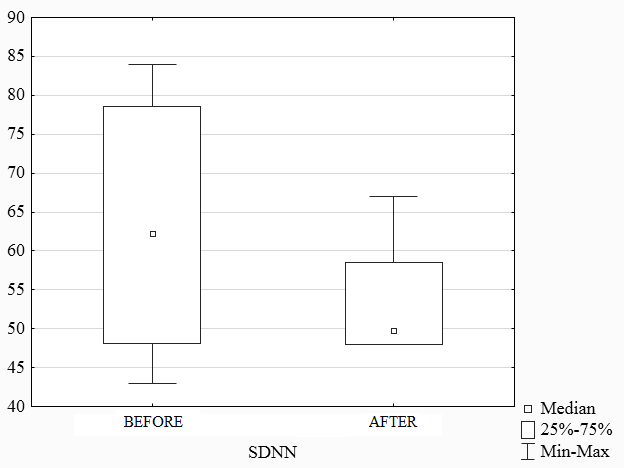
Fig. 1. Changes in standard deviation of NN intervals (SDNN) in men engaged in underwater sports (n=7) in middle altitude conditions before and after the inhalation course
We also registered an increase in SI (before: 73.2 (48.3; 128.5) c.u., after: 137.5 (77.6; 166.9) c.u.), which may reflect stronger sympathetic effect on heart rate.
No statistically significant changes were found in the functional status of the cardiovascular system and blood oxygen saturation. It is important to note that low values of saturation were registered before and after the course (before: 93.0 (93.0; 95.0) %, after: 94.0 (92.0; 94.0) %), which shows signs of hypoxia.
According to the spirometry values, positive changes (without significant differences) were found in a form of increased VC (before: 6.4 (5.1; 6.7) l, after: 6.5 (5.3; 6.9) l) and FVC (before: 6.2 (5.2; 6.8) l, after: 6.4 (5.1; 6.4) l).
Boxing. According to rules, duration of a boxing round is 1 to 3 minutes, which is why the anaerobic lactate mechanism of energy supply manifests itself to a greater extent. The study included female boxers who previously had COVID-19. They did not take the inhalation course. There were no substantial changes in HRV indices. SI decreased (before: 130.1 (106.9; 154.3) c.u., after: 113.1 (84.4; 150.1) c.u.) demonstrating a tendency for a decrease in stress of regulatory systems of a body, weakened activity of the central regulation mechanisms up to the end of the camps.
According to hemodynamic indices, sBP significantly increased (before: 103.0 (96.0; 117.0) mm of Hg, after: 111.0 (107.0; 113.0) mm of Hg, р<0,05), and at the end its values were lowered to the physiological standard.
We also registered positive changes in the external respiration indices, shown in increased VC (before: 3.7 (3.6; 4.2) l, after: 4.0 (3.8; 4.3) l) and FVC (before: 3.6 (3.6; 4.1) l, after: 3.9 (3.7; 4.1) l).
Therefore, athletes with the predominant anaerobic lactate mechanism of energy supply, who experience hypoxia during their athletic activity, may also experience it at rest during training in middle altitude. To terminate oxygen debt after physical activity they need additional measures of oxygen intake. Use of hyperoxic gas mixture inhalations for such athletes, especially for those who had COVID-19, contributes to positive changes in the functional status, consisting in a decrease in the stress of regulatory mechanisms, increased tone of the parasympathetic nervous system in the heart rate regulation, increased efficiency of the central hemodynamics parameters, enhanced function of the external respiratory system.
Effects of hyperoxic inhalations in athletes, specialized in mainly aerobic sports during the camps in the middle altitude.
Mountaineering. Mountaineering is connected with long hours of muscle work of high and moderate power. Therefore it is referred to sports with the predominantly aerobic mechanism of energy supply. The study included athletes who did not have COVID-19. They took the course of inhalations. Analysis of changes in HRV indices revealed a substantial decrease in HR (before: 86.2 (81.3; 86.7) beats/min, after: 82.3 (76.5; 86.6) beats/min, р<0.04) (fig 2).
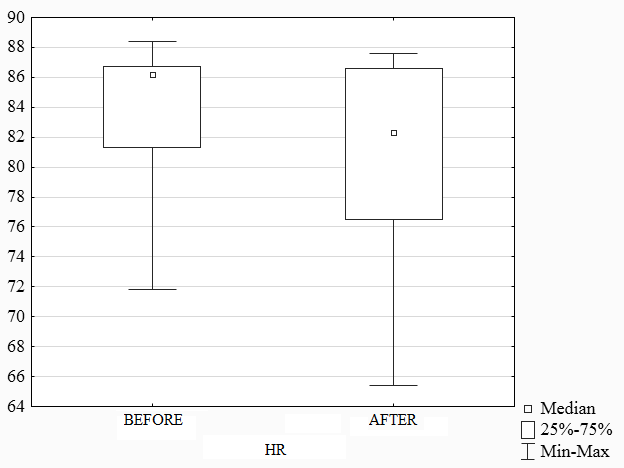
Fig. 2. Changes in heart rate (HR) in male mountaineers (n=5) in middle altitude conditions before and after the course
We also registered a decrease in SI (before: 100.4 (74.7; 143.4) c.u., after: 78.5 (72.4; 144.0) c.u.) and an increase in HF (before: 31.1 (29.8; 31.9) %, after: 36.4 (25.4; 36.9) %), which shows an increased tone of the parasympathetic nervous system in the heart rate regulation.
There were no statistically significant differences in saturation and hemodynamics, however we found a decrease in the volumetric blood flow index. After the inhalation course, value of such index was within the standard values. Both before and after the course, the participants were characterized with a state of sports hypotension (table 4).
Table 4
Changes in the cardiovascular system’s functional status of male mountaineers (n=5) in middle altitude conditions under the effect of oxygen therapy, Me (Q1; Q3)
|
№ |
Indices |
Standard |
Before |
After |
|
1 |
SpO2, % |
95-100 |
96.0 (94.0; 97.0) |
95.0 (95.0; 95.0) |
|
2 |
Stiffness index, m/s |
7-9 |
5.6 (5.3; 5.8) |
5.4 (5.4; 5.5) |
|
3 |
Reflection index, % |
30-45 |
25.0 (25.0; 25.0) |
25.0 (25.0; 25.0) |
|
4 |
Augmentation index, c.u. |
0.89-1.33 |
1.1 (1.1; 1.1) |
1.1 (1.0; 1.1) |
|
5 |
b/a, c.u. |
-0.77- |
-1.3 (-1.3; -1.2) |
-1.3 (-1.3; -1.1) |
|
6 |
d/a, c.u. |
0.15-0.49 |
-0.3 (-0.3; -0.3) |
-0.3 (-0.3; -0.3) |
|
7 |
PVR, mPa*S/m³ |
900-1500 |
1287,2 (1098.8; 1453.7) |
1266,1 (1244.8; 1461.5) |
|
8 |
Cardiac output, l/min |
4.6-5.6 |
5,6 (5.3; 5.9) |
5.4 (4.6; 5.6) |
|
9 |
CI, l/min/m2 |
2.6-3.2 |
3.4 (3.1; 3.4) |
3.1 (2.9; 3.4) |
|
10 |
meanBP, mm of Hg |
95-110 |
85.0 (81.7; 90.0) |
84.3 (81.7; 84.7) |
|
11 |
VO2, ml/min/m² |
200-300 |
310.0 (300.0; 320.0) |
320.0 (320.0; 320.0) |
|
12 |
sBP, mm of Hg |
110-140 |
115.0 (115.0; 120.0) |
112.0 (109.0; 118.0) |
|
13 |
dBP, mm of Hg |
75-90 |
70.0 (65.0; 75.0) |
71.0 (63.0; 72.0) |
Note: SpO2 – blood oxygen saturation; b/a – marker of the left ventricle function; d/a – stiffness index of the small- and medium-sized arteries; PVR – peripheral vascular resistance; CI – volumetric blood flow index; meanBP – mean blood pressure; VO2 – index of disturbed oxygen uptake from the blood microcirculation system; sBP – systolic blood pressure; dBP – diastolic blood pressure.
When analyzing the spirometry indices, we did not find any statistically significant changes, but all the indices were within the physiological standard.
Ski racing. Competitive distances of ski racers currently vary considerably in duration from submaximal to moderate power, but to a greater extent competition and training work with a predominantly aerobic mechanism of energy supply prevail. The study included athletes, who had COVID-19, all of them took the inhalation course. Ski racers did not have significant changes in HRV indices, however HF increased (before: 34.9 (34.6; 35.5) %, after: 40.0 (33.8; 42.7) %) and SI decreased (before: 86.9 (75.2; 93.3) c.u., after: 79.1 (72.2; 81.8) c.u.).
According to the central hemodynamics indices, we also did not find any statistically significant changes after the oxygen therapy course, although an increase in stiffness index (before: 6.5 (6.5; 6.8) m/s, after: 6,7 (6.2; 6.8) m/s) and saturation (before: 94.0 (94.0; 94.0) %, after: 95.0 (94.0; 95.0) %) was registered.
In regard to spirometry indices, ski racers had an increase in VC (before: 5.51 (5.12; 6.13) l, after: 5.88 (5.80; 6.39) l).
Ski mountaineering. Ski mountaineering involves taking a route in the mountains with ascent on skis with skins and/or on foot with skis and descent on skis without a piste (freeride). Duration of completing competitive distances – 3 minutes to 2 hours. Consequently, as in ski racers, energy supply can be accomplished by both anaerobic and aerobic lactate mechanisms. Most competitions are long, due to which we attributed this sport to sports with the predominantly aerobic mechanism of energy supply. The study included test subjects, who did not have COVID-19, all of them took the inhalation course. Analysis of changes in HRV did not have any statistically significant changes, but we registered a positive trend of decreasing HR (before: 86.5 (71.8; 88.4) beats/min, after: 77.7 (72.6; 95.9) beats/min) and SI (before: 143.4 (74.7; 178.6) c.u., after: 78.5 (60.6; 291.8) c.u.).
In terms of the central hemodynamics indices, we found a statistically significant reduction in sBP (p<0.03) alongside with increased oxygen uptake from the microcirculation system (p<0.04). There was also a trend of reducing blood oxygen saturation (table 5). It is possible that ski mountaineers had signs of hypoxia during training.
Table 5
Changes in the cardiovascular system’s functional status of male ski mountaineers (n=7) in middle altitude conditions under the effect of oxygen therapy, Me (Q1; Q3)
|
№ |
Indices |
Standard |
Before |
After |
P< |
|
1 |
SpO2, % |
95-100 |
96.0 (94.0; 97.0) |
95.0 (93.0; 96.0) |
- |
|
2 |
Stiffness index, m/s |
7-9 |
5.8 (5.6; 7.6) |
5,5 (5.4; 7.2) |
- |
|
3 |
Reflection index, % |
30-45 |
25.0 (25.0; 30.0) |
25.0 (25.0; 30.0) |
- |
|
4 |
Augmentation index, c.u. |
0.89-1.33 |
1.1 (1.1; 1.1) |
1.1 (1.0; 1.1) |
- |
|
5 |
b/a, c.u. |
-0.77- |
-1.1 (-1.3; -1.0) |
-1.1 (-1.1; -0.7) |
- |
|
6 |
d/a, c.u. |
0.15-0.49 |
-0.3 (-0.3; -0.3) |
-0.3 (-0.3; -0.2) |
- |
|
7 |
PVR, mPa*S/m³ |
900-1500 |
1316.0 (1207.1; 1491.8) |
1250.5 (1188.6; 1449.9) |
- |
|
8 |
Cardiac output, l/min |
4.6-5.6 |
5.6 (4.8; 6.2) |
5.7 (4.3; 5.9) |
- |
|
9 |
CI, l/min/m2 |
2.6-3.2 |
3.4 (3.2; 3.4) |
3.1 (3.1; 3.6) |
- |
|
10 |
meanBP, mm of Hg |
95-110 |
90.3 (85.0; 95.7) |
85.7 (84.7; 88.0) |
- |
|
11 |
VO2, ml/min/m² |
200-300 |
300.0 (190.0; 320.0) |
320.0 (310.0; 320.0) |
0.04 |
|
12 |
sBP, mm of Hg |
110-140 |
120.0 (115.0; 133.0) |
118.0 (104.0; 119.0) |
0.03 |
|
13 |
dBP, mm of Hg |
75-90 |
77.0 (70.0; 77.0) |
72.0 (69.0; 75.0) |
- |
Note: SpO2 – blood oxygen saturation; b/a – marker of the left ventricle function; d/a – stiffness index of the small and medium-sized arteries; PVR – peripheral vascular resistance; CI – volumetric blood flow index; meanBP – mean blood pressure; VO2 – index of disturbed oxygen uptake from the blood microcirculation system; sBP – systolic blood pressure; dBP – diastolic blood pressure.
According to the spirometry indices, there were no substantial alterations, but all the studied parameters were within the physiological standard.
Consequently, the course of hyperoxic gas mixture inhalations led to positive changes in the functional status, which was shown in reduced stress of regulatory mechanisms, increased tone of the parasympathetic nervous system and heart rate regulation of athletes with a predominant aerobic energy supply of muscle activity (including those who had COVID-19) during the camps in middle altitude.
Conclusion. The inhalation course that included not less than 7 procedures demonstrated high efficiency. We found a positive effect on the oxygen transport system of athletes of different sports regardless of a predominant energy supply mechanism, including participants, who previously had COVID-19, in conditions of intense training in middle altitude. However, athletes with an anaerobic mechanism especially need additional support with the hyperoxic mixture due to signs of hypoxia and oxygen debt related to specific features of their training and competitive activity.
Conflict of interest. The authors declare no conflict of interest.
REFERENCES
- Bulatova M.M., Platonov V.N. Middle altitude, high altitude and artificial hypoxia in athlete training. Sports medicine, 2008, vol. 1, pp. 95-119. (in Russ.)
- Bajkovskij Yu.V., Bajkovskaya T.V. Factors defining an athlete’s training in conditions of high and middle altitude. Moscow: TVT Divizion, 2010. 280 p. (in Russ.)
- Ter-Akopov G.N., Koryagina Yu.V. Using hypo- and hyperoxic factors in the medical and biological support of athletes (analytical review). Modern Issues of Biomedicine, 2022, vol. 6, no. 4, pp. 252-259. (in Russ.)
- Millet G.P., Debevec T., Brocherie F., Burtscher M., Burtscher J. Altitude and COVID-19: Friend or foe? A narrative review. Physiological reports, 2021, vol. 8(24), art. no. e14615.
- Guba V.P., Levushkin S.P., Marinich V.V., Sokovikov O.B. Customized training service with health and fitness tests for cyclic sports elite in post-COVID-19 rehabilitation period. Theory and Practice of Physical Culture, 2021, no. 7, pp. 14-16. (in Russ.)
- Shchurov A.G. Применение гипербарической оксигенации для повышения работоспособности спортсменов. Theory and Practice of Physical Culture, 2006, no. 9, pp. 28-29. (in Russ.)
- Reutskaya E.A., Koryagina Yu.V. Inhalation of air breathing mixture with increased oxygen content as a measure of increasing the functional capabilities of the respiratory system of skiers. Issues of functional training in elite sports, 2013, no. 1, pp. 198-207. (in Russ.)
- Mikhalev V.I., Reutskaya E.A., Koryagina Yu.V. The effect of oxygen-air mixture with 93% of oxygen on heart rate variability and external respiration system of athletes. Theory and Practice of Physical Culture, 2012, no. 11, pp. 12-15. (in Russ.)
- Aliev D.F., Kudrya O.N. Hyperoxia as a means of recovery of swimmers after training sessions in various types of sports. International Research Journal, 2021, no. 3-2 (105), pp. 6-10. (in Russ.)
- Ter-Akopov G.N., Koryagina Yu.V., Abutalimova S.M. Impact of middle-allands hypoxia and oxygen therapy on the dynamics of the functional state of the cardiorespiratory system of the organism of athletes suffering COVID-19. Theory and Practice of Physical Culture, 2023, no. 8, pp. 44-46. (in Russ.)
- Ter-Akopov G.N., Koryagina Yu.V., Abutalimova S.M., Nopin S.V. Influence of normobaric oxygen therapy on the dynamics of the functional state of the cardiorespiratory system of athletes who recovered from COVID-19 during training in the middle mountains. Voprosy kurortologii, fizioterapii, i lechebnoi fizicheskoi kultury, 2023, vol. 100, no. 3-2, pp. 196-197. (in Russ.)
- Kushnareva Yu.V., Koryagina Yu.V., Abutalimova S.M., Popov A.N. Influence of hyperoxic mixture on the functional state of the external respiration system of athletes who had COVID-19 and train in middle altitude. Russian Journal of Sports Science: Medicine, Physiology, Training, 2023, vol. 2, no. 2(6), pp. 27-33. (in Russ.)
INFORMATION ABOUT THE AUTHORS:
Yulia V. Kushnareva – Candidate of Biological Sciences, Senior Researcher of the Center of Biomedical Technologies, FSBI “North-Caucasian Federal Research and Clinical Center of Federal Medical and Biological Agency”, Essentuki, e-mail:
Gukas N. Ter-Akopov – General Director, FSBI “North-Caucasian Federal Research and Clinical Center of Federal Medical and Biological Agency”, Essentuki.
Sabina M. Abutalimova – Candidate of Medical Sciences, Senior Researcher of the Center of Biomedical Technologies, FSBI “North-Caucasian Federal Research and Clinical Center of the FMBA of Russia”, Essentuki, e-mail:
For citation: Kushnareva Yu.V., Ter-Akopov G.N., Abutalimova S.M. Effects of hyperoxic inhalation in athletes with aerobic and anaerobic lactate mechanisms of energy supply of muscle activity, who had COVID-19, during training in middle altitude conditions. Russian Journal of Sports Science: Medicine, Physiology, Training, 2023, vol. 2, no. 4. DOI: 10.24412/2782-6570_2024_03_01_4