


Download the article in pdf format
Publication date: 01.03.2024
DOI: 10.24412/2782-6570_2024_03_01_3
UDC 376.2
METHOD OF TREATMENT AND RESTORATION MEASURES FOR INFANTS WITH TORTICOLLIS
N.V. Lunina1,2, E.D. Lyubimova1
1Russian University of Sports “GTSOLIFK”, Moscow, Russia
2FSBI “North-Caucasian Federal Research and Clinical Center of the Federal Medical and Biological Agency”, Essentuki, Russia
Abstract. The article presents the effectiveness of treatment and restoration measures for infants with torticollis. The course’s duration was 5 weeks with gradual complication of the applied measures and forms of sessions. After the course, examination results according to the R. Bernbeck’s method were improved: “Neck rotation” – by 59.63%, “Lateral neck flexion” – by 83.51%, “Point ratio according to the muscle function scale (affected/unaffected side)” – by 72.43%. The anthropometric results were also improved: passive head tilt to the affected muscle – by 25,30%, passive head tilt to the side opposite to the affected muscle – by 6.97%, distance from the mental protuberance (point 2) to the acromion (point 3) in passive head turn toward the affected muscle – by 37.2%, in passive head turn to the side opposite to the affected muscle – by 37.4%. Values of cervical spine goniometry in passive head tilt to the affected muscle improved by 76%, in passive head tilt to the side opposite to the affected muscle – by 56%. When parents of the patients subjectively assessed the course’s effect, 60% of them reported high results, 40% of them reported good results. The data obtained in the course of the study convincingly demonstrate effectiveness of treatment and restoration measures for infants with torticollis.
Keywords: treatment and restoration measures, torticollis, children, infancy, hydrokinesiotherapy, therapeutic gymnastics, therapeutic massage, myofascial release.
Introduction. The problem of birth deformities remains as the most relevant and has serious social and medical significance. That having been said, torticollis is registered in 16% of newborns [1]. Torticollis is a congenital or acquired neck deformity that is characterized with an incorrect position of the head, i.e. lateral tilt and turning it [2-3]. Congenital torticollis is a pathology due to unilateral developmental disorder of the sternocleidomastoid muscle, characterized by shortening of one of these muscles. This pathology may also be caused by a deformity of the cervical vertebrae, in case of which the vertebra narrows or becomes wedge-shaped, resulting in an imbalance of the nearby muscle system. The progression of the deformity is expressed in facial asymmetry, asymmetry of nasolabial folds, atrophy of the cheek muscles, smaller lower jaw and a number of other diverse signs. Application of treatment and restoration measures, such as physical therapy and massage, with other methods at earlier stages of child’s development leads to more effective corrective results, contributing to prevention of occurrence and progression of such complications.
Aim of this study: to evaluate effectiveness of treatment and recovery measures for children with torticollis.
Methods and organization. The study took place in the child swimming center “Bul’-Bul’” (“Gurgle-gurgle”) located in Chelyabinsk. It included 15 4-5-month children, 9 boys and 6 girls. Main criteria for participant selection were: age – 4-5 months, congenital torticollis, absence of contraindications for the used methods.
Before and after the course, we carried out an external examination according to the R. Bernbeck’s method [4-5]: neck rotation (degrees), lateral neck flexion (degrees), point ratio according to the muscle function scale (affected/unaffected side). We also estimated anthropometric indices according to a distance (in cm) between points (fig. 1): head tilt to the affected muscle, point 1 to point 3 (cm); passive tilt to the side opposite to the affected muscle, point 1 to point 3 (cm); distance between point 2 and point 3 in passive head turn to the side of the affected muscle (cm); distance between point 2 and point 3 in passive head turn to the side opposite to the affected muscle (cm) (fig. 1).
Goniometry was also performed with the evaluation of the results (in degrees) for passive head tilt: passive head tilt to the affected muscle and passive head tilt to the side opposite to the affected muscle. The obtained data were statistically processed in Statistica 13. We calculated the arithmetic mean (X) and standard deviation (σ), the significance of the differences between the indices before and after the study was identified with the Wilcoxon’s signed rank test at the level of p<0,05.
The course lasted 5 weeks and consisted of 3 periods: introductory (14 days), main (10-14 days), final (5-7 days), each of which was characterized by specific tasks and the choice of means and forms for their implementation (fig. 2).
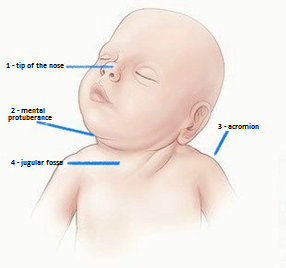
Fig 1. Location of measurement points in the anthropological study
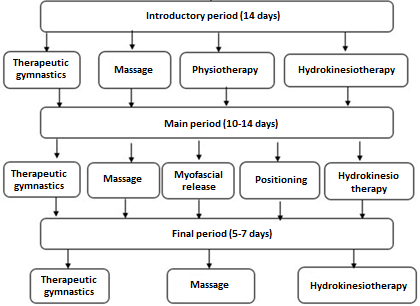
Fig. 2. General scheme of methodology of treatment and recovery measures for infants with torticollis
The introductory period of treatment and recovery measures included therapeutic gymnastics (passive alternating and simultaneous movements in the limbs) for 10-15 minutes every day, gentle rocking on an exercise ball, therapeutic massage (every other day), physiotherapy (wax therapy) was carried out 2-3 times a day, hydrokinesiotherapy – each day for 7-10 minutes (swimming on a stomach, side pulling) at a water temperature of 36-37°С.
The main period additionally used myofascial release conducted every other day for 5 minutes (relaxation of muscles and fasciae – connective tissue, pressure on the points was applied by hand or with a roller), positioning – daily 2-3 times a day (a child is laid down on a hard mattress without a pillow, the procedure was done during a nap); time of hydrokinesiotherapy session was increased to 7-12 minutes every other day at a water temperature of 34-35°С. The final period consisted of: therapeutic gymnastics, duration of a therapeutic massage session increased to 10-15 minutes, the time of hydrokinesiotherapy procedures (every other day) increased to 10-15 minutes with a decrease in water temperature to 33-34°С.
Effects of the suggested course were evaluated by the dynamics of the studied parameters (table 1, 2). Results of the R. Bernbeck examination revealed significant improvement in the following indices: “Neck rotation” – by 59.63%, “Lateral neck flexion” – by 83.51%, “Point ratio according to the muscle function scale (affected/unaffected side)” – by 72.43% (table 1).
Table 1
Changes in the results of the R. Bernbeck examination in infants with torticollis during the course, X±σ
|
Tests |
Initial values |
Final values |
P< |
|
Neck rotation, degrees |
45±11.02 |
71±6.39 |
0.05 |
|
Lateral neck flexion, degrees |
28±13.90 |
51±2.92 |
0.05 |
|
Point ratio according to the muscle function scale |
1.85±0.23 |
0.51±0.01 |
0.05 |
Results and discussion. As a result of the course, the anthropometric indices improved: passive head tilt to the affected muscle – by 25,30%; passive head tilt to the side opposite to the affected muscle – by 6.97%; increase in the distance between point 2 and point 3 in passive turn to the affected muscle amounted to 37.2%; dynamics of the point 2 to point 3 distance in passive turn to the side opposite to the affected muscle improved by 37.4% (table 2).
Values of cervical spine goniometry in passive head tilt to the affected muscle improved by 76%, in passive head tilt to the side opposite to the affected muscle – by 56% (table 3).
Table 2
Changes in the results of the anthropometry test in infants with torticollis during the course, X±σ
|
Tests |
Initial values |
Final values |
P< |
|
Passive head tilt to the affected muscle, point 1 to point 3, cm |
9.92±2.62 |
7.41±0.07 |
0.05 |
|
Passive head tilt to the side opposite to the affected muscle, point 1 to point 3, cm |
6.31±0.28 |
5.87±0.32 |
0.05 |
|
Point 2 to point 3 distance in passive head turn to the affected muscle, cm |
9.31±0.05 |
5.85±0.37 |
0.05 |
|
Point 2 to point 3 distance in passive head turn to side opposite to the affected muscle, cm |
5.80±0.31 |
3.63±0.02 |
0.05 |
Table 3
Changes in the results of the goniometry test in infants with torticollis during the course, X±σ
|
Tests |
Initial values |
Final values |
P< |
|
Passive head tilt to the affected muscle, degrees |
13±5.60 |
35±9.74 |
0.05 |
|
Passive head tilt to the side opposite to the affected muscle, degrees |
25±4.10 |
39±7.64 |
0.05 |
In the survey of the patients’ parents on the effectiveness of the course, 60% of the respondents reported high results, the rest (40%) reported good results.
Conclusion. Positive result dynamics of the R. Bernbeck examination, anthropometric indices, goniometry of the cervical spine and parental assessment convincingly demonstrate effectiveness the course that includes treatment and restoration measures for infants with torticollis.
Conflict of interest. The authors declare no conflict of interest.
REFERENCES
- Kaplan S.L., Coulter S., Fetters L. Physiotherapeutic treatment of congenital muscular torticollis: an evidence-based clinical practice guide: from the Pediatrics section of the American Association of Physiotherapists. Pediatr Phys Ther, 2013, no. 25, pp. 348-394.
- Semenov, S.V., Sharpari V.D., Neganov O.A., Kamenskikh M.S., Egorov V.A., Islentiev A.V. Current state of the problem of diagnostics and treatment of congenital muscular.The Genij Ortopedii, 2013, no. 3, p. 98. (in Russ.)
- Bakhteeva N.A. Ionova T.A., Belonogov V.N., Bazhanov S.P., Ostrovskij V.V. Pathological changes of the cervical spine in children with cervical pain syndrome. Pediatric Traumatology, Orthopaedics and Reconstructive Surgery, 2016, no. 4 (4), pp. 118-122. (in Russ.)
- Bernbeck R. Dispensary examination of the locomotor system in children: (Orthopedic diagnostics. diseases and lesions of the neuromuscular system). Translated from German by I.G. Epstein.: Meditsina, 2010. 109 p. (in Russ.)
- Garkavenko, Yu.E., Pozdeev, A.P., Kryukova I.A. Algorithm for torticollis diagnosis in children of younger age groups. Pediatric Traumatology, Orthopaedics and Reconstructive Surgery, 2021, vol. 9, no. 4, pp. 477-490 (in Russ.)
INFORMATION ABOUT THE AUTHORS:
Natal’ya V. Lunina – Candidate of Biological Sciences, Associate Professor, Associate Professor of the Department of Physical Rehabilitation, Massage and Health-Improving Physical Culture named after I.M. Sarkizov-Serazini, Russian University of Sports “GTSOLIFK”, Moscow; Senior Researcher of the Center for Biomedical Technologies, FSBI “North-Caucasian Federal Research and Clinical Center of Federal Medical and Biological Agency”, Essentuki, e-mail:
Elizaveta D. Lyubimova – Master’s Student of the Department of Physical Rehabilitation, Massage and Health-Improving Physical Culture named after I.M. Sarkizov-Serazini, Russian University of Sports “GTSOLIFK”, Moscow.
For citation: Lunina N.V., Lyubimova E.D. Method of treatment and restoration measures for infants with torticollis. Russian Journal of Sports Science: Medicine, Physiology, Training, 2024, vol. 3, no. 1. DOI: 10.24412/2782-6570_2024_03_01_3