


Download the article in pdf format
Publication date: 04.09.2024
DOI: 10.24412/2782-6570-2024_03_03_4
UDC 712; 551.58; 796.5
BIOCLIMATIC, LANDSCAPE AND RECREATIONAL POTENTIAL OF ZHELEZNOVODSK FROM THE POINT OF HEALTH PHYSICAL CULTURE
V.S. Nopina1,2, A.P. Tychinina2, O.N. Akimkina2
1I.M. Sechenov First Moscow State Medical University, Moscow, Russia
2FSBI “North-Caucasian Federal Research-Clinical Center of Federal Medical and Biological Agency”, Essentuki, Russia
Abstract. Aim of the study – to examine and estimate microclimate indices, landscape and recreational potential of Zheleznovodsk sanatoriums’ territory. The study materials included route and climatic observation data, climate reference materials, guiding documents, building codes, international technical standards, state reports and scientific articles. The conducted analysis has shown that microclimate indices were within the normal values and have a favorable effect on a human body due to a high level of light negative air ions, territory luminance, low ion unipolarity coefficient, humidity and carbon dioxide content. Abundant flora on the territories of sanatoriums and the town provides a high level of bioclimatic, landscape and recreational potential for health physical culture.
Keywords: Zheleznovodsk, climate, microclimate indices, bioclimate, bioclimatic potential, landscape and recreational potential, health tourism, physical culture, health physical culture.
Introduction. Zheleznovodsk is one of resort towns of federal importance located in Caucasian Mineral Waters (CMW). This region is widely known for sanatorium-resort treatment and attracts tourists with its unique recreational resources [1-2]. One of the main therapeutic resources of CMW sanatoriums is favorable climate, which has been studied by ecologists for a long time [3]. On this territory, the favorable climate is created due to its geographical position – it provides sufficient solar radiation, which creates favorable air temperature due to the location of the Zheleznaya Mountain within the town, which is a natural monument of Stavropol Krai. It is covered with broad-leaved forest [4], which ensures high oxygen saturation of the neighboring areas [5]. Moreover, the mountain has a large number of mineral water springs. All this attracts a lot of tourists for sanatorium-resort treatment and health improvement. One of the most promising types of health improvement is terrain cure therapy or healthy walking.
The study of the climatic potential of sanatorium territories is relevant in relation with the decree of the Government of the Russian Federation dated 27.05.2024 No 681 “On the preparation and issuance of special medical assessment”.
Aim of the study – to examine microclimate characteristics, landscape and recreational potential of the Zheleznovodsk sanatoriums’ territories.
Methods and organization. The study and measurement of Zheleznovodsk sanatoriums’ territories (Zheleznovodsk Clinic, N.K. Krupskaya Children Sanatorium, 30th Victory Anniversary Sanatorium, Salyut Sanatorium, Ernst Thälmann Sanatorium), which are located in different parts of the town (on the southern and south-eastern slopes of the Zheleznaya Mountain, close to the resort park and resort lake), was carried out under the agreements on preparation of special medical assessments.
The study materials included results of route and climatic observation, climate reference materials, guiding documents, SNIPs (building codes), GOSTs (international technical standards), state reports, scientific articles.
The route and climatic observation was carried out on July 16 and August 9, 2024. It included measurement of positive and negative light air ion concentration (with the mobility of К>0.5 cm2/V·s), quantities of aerosol particles of different size gradations (8 gradations in the range from 0.2 to 10 µm) in the surface atmosphere (at the respiratory level of 1.5 m), air temperature and humidity, wind speed and direction, cloud amount and shape, ambient dose equivalent rate (ADER) of gamma radiation. We also estimated the condition of orography, flora and natural panoramas in accordance with the recommendations.
Following devices were used in the study: MAC-01 light-sized air ion counter with computer software (State Register of measuring instruments No 20429-11), Meteoscope-M with computer software, RadiaSkan-801 radiation dosimeter with computer software (State Register of measuring instruments No 69478-17), SAChM 4801-01 aerosol analyzer, a mobile version (State Register of measuring instruments No 676936-19-19), and DT-1309 light meter (6015 80 990 0, EAEU CN of FEA).
Results and discussion. Microclimate indices were measured in several locations in the territory of each sanatorium. The average value of indices for each sanatorium are presented in table 1.
Table 1
Microbioclimate indices of the Zheleznovodsk sanatoriums’ territories
|
№ |
Microbioclimate indices |
||||||
|
Т, °С |
RH, % |
AP, hPA |
О2, % |
СО2, ppm (number of units/million) |
∑ |
O/T, klx |
|
|
30th Victory Anniversary Sanatorium |
31.50 |
29.88 |
715.50 |
20.68 |
380.00 |
1575/0.94 |
25.05/6.67 |
|
Salyut |
34.06 |
24.44 |
712.60 |
20.63 |
388.86 |
1430/1.1 |
24.72/6.37 |
|
Zheleznovodsk Clinic |
33.50 |
23.50 |
709.00 |
20.70 |
373.00 |
1220/0.9 |
25.00/6.02 |
|
N.K. Krupskaya Children |
34.88 |
21.82 |
706.04 |
20.64 |
364.14 |
1446/1.28 |
24.54/6.37 |
|
Ernst Thälmann Sanatorium |
31.88 |
34.50 |
706.56 |
20.90 |
358.53 |
1342.5/0.63 |
18.47/9.44 |
Note: Т, °С – air temperature; RH, % – relative humidity; AP, hPa – air pressure; О2, % – relative oxygen content in the surface atmosphere; СО2, ppm, number of units/million – relative carbon dioxide content in the surface atmosphere; ∑[(-) + (+)] / IUC (ion unipolarity coefficient) – air ionization background, ion/cm3; О/T – luminance (klx), in the open (О), and under the tree crown (T)
We have registered favorable values of microclimatic indices, except for high air temperature (31.50-34.88), because the research takes place during the hottest months (July, August). The average temperature during these months in Zheleznovodsk is 21.0 and 20.6 °C respectively [6]. The lowest temperature was registered in the 30th Victory Anniversary Sanatorium’s territory because of its location on the shores of the resort lake. Due to the low relative humidity, no negative effects of high temperature [7-8] were observed.
Carbon dioxide content values were also within (358.53-388.86) the norm (up to 450), the oxygen content in the surface atmosphere reaches 20.9%, which ensures a low level of atmospheric pollution of sanatorium territories by exhaust gases.
High level of air ionization (1342.5-1575) in the surface atmosphere due to the high level of landscaping of sanatorium territories and substances emitted by them, low ion unipolarity coefficient (0.63-1.28) reflect high health properties of the air in these territories. Light negative air ions provide an effective prevention and treatment of diseases of different organs and systems, such as endocrine system [9], skin (dermatitis) [10] et al.
The same plants (fig. 1) as on the Zheleznaya Mountain itself were found in the territories of the sanatoriums, i.e oak, maple tree, common linden, blue spruce, European spruce and other ornamental shrubs. Aside from light negative air ions, they also emit phytoncides, which provide reduction of toxic gases in the atmosphere [11] and have antibacterial properties [12]. Trees and shrubs fulfil a landscape-forming function and provide aesthetic pleasure and relaxation while being outdoors in nature.
The total level of aerosol particles in the size range of 0.2 to 10 μm reached the highest values (76803 particles/l) in the 30th Victory Anniversary Sanatorium’s territory (fig. 2). Such aerosol content corresponds to particularly favorable conditions.
Such high aerosol content may be associated with the sanatorium’s location at an altitude of 507-516 meters above sea level close to the resort lake, which makes it difficult to ventilate the territory and ensures the accumulation of aerosol particles, including those emitted by plants (pollen). At this time sun flower and hazel, weeds such as elderberry, saltbush, wormwood and common ragweed are actively flowering [13]. For people with allergy it is recommended to limit their time outdoors and pay special attention to their well-being.
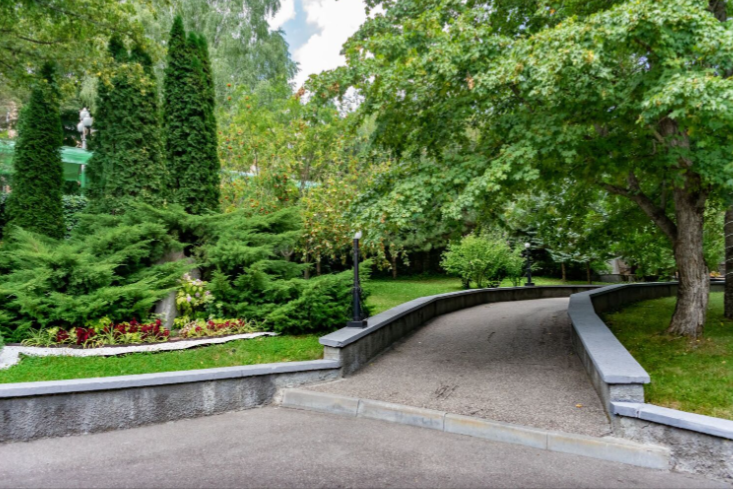
Fig. 1. Landscaping of the 30th Victory Anniversary Sanatorium’s territory
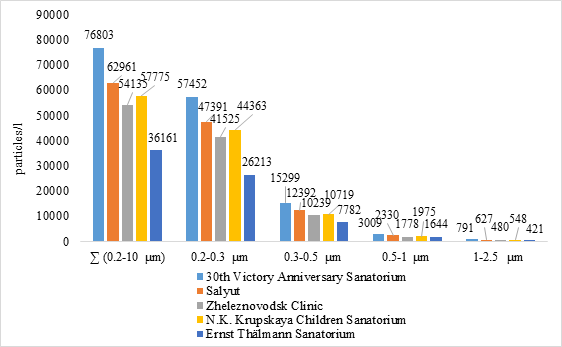
Fig. 2. Aerosol pollution in the territories of Zheleznovodsk sanatoriums
The biologically significant aerosol level for a human body in the range of 0.5 to 1 μm was within the normal values (up to 3000 particles/l) in almost all the sanatoriums. The 30th Victory Anniversary Sanatorium was an exception, where the average pollution level in the range of 0.5 to 1 μm was slightly higher than the standard – 3009 particles/l (fig. 3). The lowest aerosol content in such range was registered in the Ernst Thälmann Sanatorium due to its location at an altitude of 629-656 m above the sea level.
The radiation and ecology study of the territories has revealed that the ambient dose equivalent rate of gamma radiation was normal (up to 0,5 µSv/h) in all territories (0.11-0.19 µSv/h), which reflects absence of radiation pollution in Zheleznovodsk (fig. 4).
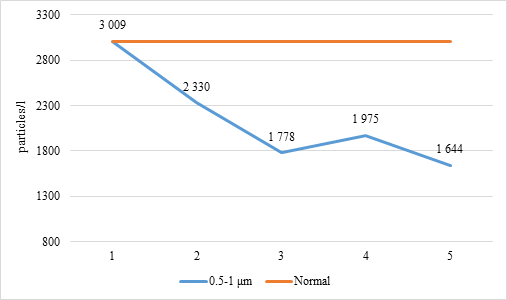
Fig 3. Surface atmosphere pollution by aerosol particles in the size range from 0.5 to 1 μm in the territories of Zheleznovodsk sanatoriums
Note: 1 – 30th Victory Anniversary Sanatorium; 2 – Salyut; 3 – Zheleznovodsk Clinic; 4 – N.K. Krupskaya Children Sanatorium; 5 – Ernst Thälmann Sanatorium
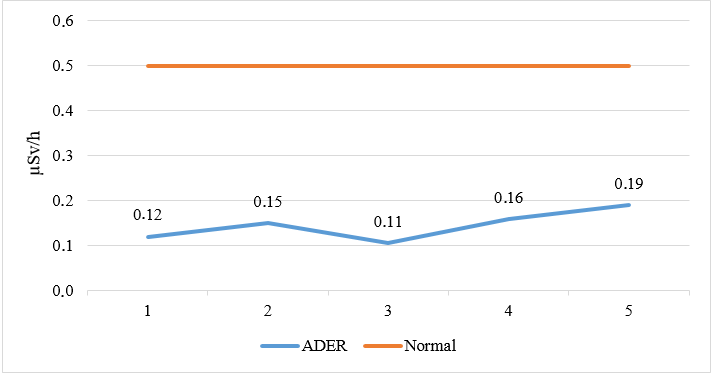
Fig. 4. Radiation pollution level in Zheleznovodsk
Note: ADER – ambient dose equivalent rate; 1 – 30th Victory Anniversary Sanatorium; 2 – Salyut; 3 – Zheleznovodsk Clinic; 4 – N.K. Krupskaya Children Sanatorium; 5 – Ernst Thälmann Sanatorium
Conclusion. The microclimate characteristics in the territories of the Zheleznovodsk sanatoriums are within the normal values, they provide favorable conditions [14] for climate therapy, such as sun therapy, air therapy, health physical culture, i.e. terrain cure therapy. For people with allergy it is recommended to take into account the blooming calendar when planning climate therapy. The saturation of the surface atmosphere with oxygen, high landscaping level in the territory make it possible to carry out health activities, such as terrain cure therapy and health tourism. Patients undergoing sanatorium-resort treatment are recommended to walk on the territories of sanatoriums and terrain cure paths located in the park. Such activity provides a reduction of the nervous system excitability and improve metabolism. To preserve the therapeutic properties of the climate and the high landscape and recreational potential of the territories, it is necessary to conduct periodic environmental monitoring.
Conflict of interest. The authors declare no conflict of interest.
REFERENCES
- Babyakin A.F., Efimenko N.V., Glukhov A.N., Grinzaid Yu.M., Danilov S.R., Kajsinova A.S., Korchazhkina N.B., Povolotskaya N.P., Polozkov I.M., Chalaya E.N. Balneology of Caucasian Mineral Waters. Vol. 1. Ujba V.V., ed. Pyatigorsk: LLC “Izdatel’skij dom”, 2009. 333 p. ISBN: 5-86351-033-8. (in Russ.)
- Babyakin A.F., Efimenko N.V., Amiyants V.Yu., Andrienko N.G., Blinkova L.N., Velikanov D.I., Glukhov A.N., Grinzaid Yu.M., Zherlitsina L.I., Kajsinova A.S. et al. Balneology of Caucasian Mineral Waters. 2. Ujba V.V., ed. Pyatigorsk: Pyatigorsk State Research Institute of Balneology, 2011. 368 p. ISBN: 5-86351-033-8. (in Russ.)
- Povolotskaya N.P., Slepykh V.V., Efimenko N.V., Zherlitsina L.I., Senik I.A., Urvatcheva E.E., Kirilenko A.A., Kortunova Z.V. Dynamics of recreational landscapes in the resorts of the Caucasian Mineral Waters. Resort Medicine, 2014, vol. 3, pp. 9-20. (in Russ.)
- Zhekeznaya mountain. Ministry of Natural Resources and Environment of the Stavropol Krai. Available at: https://mpr26.ru/oopt/pamyatniki-prirody/gora-zheleznaya/ (accessed 14.08.2024) (in Russ.)
- Dorozhkina E.A. Effect of plants on building microclimate and human body. Symbol of science, 2015, no. 4, pp. 228-231. (in Russ.)
- Handbook on USSR climate. Issue 13, part II. Air and soil temperature. Leningrad: Gidrometeoizdat, 1966. 430 p. (in Russ.)
- Povolotskaya N.P. Weather classification and assessment of the thermal state of a person during climate treatment and recreation in Caucasian Mineral Waters. Issues of Medical Climatology and Climate Therapy of Patients on Resorts. Pyatigorsk: Pyatigorsk Research Institute of Balneology and Physiotherapy, 1975. pp. 16-23. (in Russ.)
- Smirnov A.A. Effect of high temperature and air humidity on the rate of human body overheating. Hygiene and Sanitation, 1961, n 10, pp. 20-23. (in Russ.)
- Meshcheryakov A.Yu. Evaluation of negative air ion effect on a person in man-made environments. Vestnik nauchnykh konferentsij, 2017, no. 2-1. pp. 98-102. (in Russ.)
- Dikova O.V. Negative air ions in the treatment of dermatitis. Journal of New Medical Technologies, 2009, vol. 16, no. 1, pp. 71-74. (in Russ.)
- Litvinova L.I. Role of volatile plant phytoncides in atmosphere cleansing from some toxic emissions from industries and motor vehicles. Hygiene and Sanitation, 1982, no. 4, pp. 15-18. (in Russ.)
- Chubatova S.A. Phytoncides: history and application prospects. Bacteriology, 2020, vol. 5, no. 3, pp. 60-67. (in Russ.)
- North Caucasus blooming calendar. Available at: https://nozefrinalergy.ru/tpost/r1jrmdvc71-kalendar-tsveteniya-severnogo-kavkaza (accessed 14.08.2024) (in Russ.)
- Mikhajlenko V.I., Mikhajlenko A.V., Povolotskaya N.P. et al. Natural resource potential of the territory and nature management: regional aspects: learning guide. Mikhajlenko V.I., ed. Pyatigorsk: North Caucasus State Technical University, RIA-KMV, 2007. 320 p. (in Russ.)
INFORMATION ABOUT THE AUTHORS:
Veronika S. Nopina – Student, N.V. Sklifosovskij Institute of Clinical Medicine, I.M. Sechenov First Moscow State Medical University, Moscow, e-mail:
Aleksandra P. Tychinina – Researcher of the Center of Biomedical Technologies, FSBI “North-Caucasian Federal Research-Clinical Center of Federal Medical and Biological Agency”, Essentuki, e-mail:
Oxana N. Akimkina – Junior Researcher of the Center of Biomedical Technologies, FSBI “North-Caucasian Federal Research-Clinical Center of Federal Medical and Biological Agency”, Essentuki, e-mail:
For citation: Nopina V.S., Tychinina A.P., Akimkina O.N. Bioclimatic, landscape and recreational potential of Zheleznovodsk from the point of health physical culture. Russian Journal of Sports Science: Medicine, Physiology, Training, 2024, vol. 3, no. 3(11). DOI: 10.24412/2782-6570-2024_03_03_4