


Download the article in pdf format
Publication date: 15.09.2024
DOI: 10.24412/2782-6570-2024_03_03_2
UDC 612; 615.8
EFFECT OF HALOTHERAPY AND HEALTH PHYSICAL CULTURE ON PHYSICAL DEVELOPMENT OF PRESCHOOL CHILDREN
A.P. Tychinina, Yu.V. Koryagina, V.V. Korneva, O.N. Akimkina
FSBI “North-Caucasian Federal Research-Clinical Center of Federal Medical and Biological Agency”, Essentuki, Russia
Abstract. Halotherapy contributes to a stabilization of the autonomic nervous system, has a positive psychoemotional impact, sanogenic, mucolytic, bronchodraining, anti-inflammatory and immunomodulatory effect on the respiratory tract in preschool children. The objective of the study was to identify how halotherapy and health physical culture classes influence physical development and functional status of preschool children. Before and after the course of procedures, we identified the functional state of respiratory, circulatory, musculoskeletal systems, morphological status and level of physical development in 15 preschool children (age – 5.7 (5.3; 6.0) years). As a result, we have revealed that the effect of the complex on the functional state of cardiovascular, respiratory systems and adaptive reserves of preschool children was manifested in a reduced vascular tone and improved functional capabilities of the external respiration system. The course’s effect on the functional status of the musculoskeletal system was shown in a reduced fat component of body mass, improved physical development, i.e. strength, flexibility, speed-strength qualities, as well as insignificant improvement in balance function.
Keywords: halotherapy, heart rate variability, anthropometry, physical parameters, state of health, boys, girls, height, weight.
Introduction. Over the last years, health of children is associated with an increased number of risk factors, functional disorders, chronic illnesses and socially significant diseases, physical development impairments, and with rapid decrease in a number of healthy children [1-2].
A great significance is attributed to physiotherapy technologies in health programs, as well as in a comprehensive rehabilitation of children with chronic illnesses. It is known that one of the most important components of natural and man-made physical factors that determine the need to include them into different therapeutic, preventive and rehabilitation complexes, is their non-specific adaptive effect on the main regulatory mechanisms, due to which a rearrangement of all body functional systems occurs [3]. A preliminary assessment of reserve capabilities of a sick child’s body followed by a correction of identified disorders through proper use of physical factors allows to improve efficiency of short-term therapeutic and rehabilitation courses and prevent the “failure” of adaptation, which is relevant in terms of modern social and economic conditions. One of the non-drug methods that became popular in Russian healthcare is halotherapy (HT) – a treatment method in conditions of recreated microclimate of salt speleotherapy centers [4]. The main acting factor is the dispersion system of the air gases, in which the smallest sodium chloride particles are suspended. Dry high-dispersed sodium chloride aerosol has a sanogenic, mucolytic, bronchodraining, anti-inflammatory and immunomodulatory effect on the respiratory tract [5]. As a result, positive changes were found in the systemic humoral and cell immunity while the inflammatory process activity is reduced and antigens are eliminated from the body [6-7]. HT procedures contribute to a stabilization of the autonomic nervous system and have a positive psychoemotional impact [4].
Another health and therapeutic factor in preschool age is motor activity that plays an important role in forming the morphofunctional system, mental cognition and moral side of personality [8-9]. Physical exercise for health preservation and improvement are recommended for children who get sick frequently, it contributes to a development of cardiovascular and respiratory systems, improvement of the musculoskeletal system, correct posture and foot position, i.e. balanced physical development.
Objective of the study: to reveal how HT and health physical culture classes impact physical development and functional status of preschool children.
Methods and organization. In July 2024, researchers of the Center of Biomedical Technologies (North-Caucasian Federal Research-Clinical Center) examined 15 preschool children (5.7 (5.3; 6.0) years), both male and female, height – 113.5 (112; 116) cm, weight – 20.5 (19; 21) kg in the “Rodnichyok” Kindergarten (Essentuki). Previously, their parents (or their legal representatives) gave an informed consent in accordance with the 9th Federal law dated July 27, 2006 No 152-FZ “On personal data” for automated (and without automation) personal data processing and use, conducting research and medical interventions. A medical worker was allowed to examine the children to identify the level of physical fitness. Health therapy sessions (HT and health physical culture) took place every day for 2 weeks (10 sessions in total).
Duration of each session was 30 minutes. The sessions took place in a tent, inside which the atmosphere of a salt cave was artificially created using a Galovit device operating in the P2 mode (density of fine salt aerosol was 4 mg per m3).
During the procedure, the children performed exercises on orthopedic massage devices watching a movie tutorial. In one session, children exercised for 3.5 minutes with massage balls, 3.5 minutes on orthopedic floor mats and 3.5 minutes on balance cushions. Between exercises the children watched cartoons for cultural and moral development.
Before and after the course we identified the children’s functional status of respiratory, circulatory, musculoskeletal systems, morphological status and level of physical development.
The functional status of the cardiovascular system was determined with the ESTECK System Complex (LD Technology, USA) (fig. 1). During the anthropometric study, all the standard requirements were met. The body mass composition was registered with the bioimpedance measurement, using the same device. To study the external respiration functions, we used the CareFusion spirometer (CareFusion, USA).
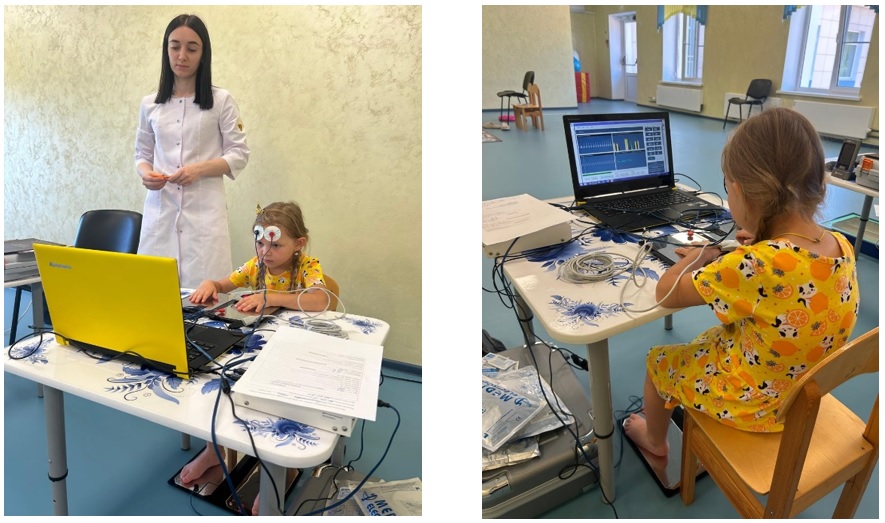
Fig. 1. Study on the ESTECK System Complex (LD Technology, USA)
Physical development study included tests for identifying wrist strength, speed-strength capabilities (standing long jump), and flexibility (seated forward bend). Maximal wrist strength was measured with the EN101 dynamometer (China).
Functional status of the musculoskeletal system was estimated with computer stabilometry (balance and muscle tone functions) (fig. 2A) and computer plantography (fig. 2B). Before the test, following parameters were measured: height, foot length and ankle-to-toe distance. Stabilometry was conducted on the ST-150 force platform, using the STPL software (Mera-TSP, Moscow) (fig. 2A). The study on the force platform was performed barefoot, with the feet placed in a “heels together” position, toes apart at an angle of 30° (European foot position). Plantography was done on the PODOSKAN – MBN device (fig. 2B). Following parameters were measured: the Godunov index (flat feet degree), the Sztriter index (%) and hallux valgus angle (°).
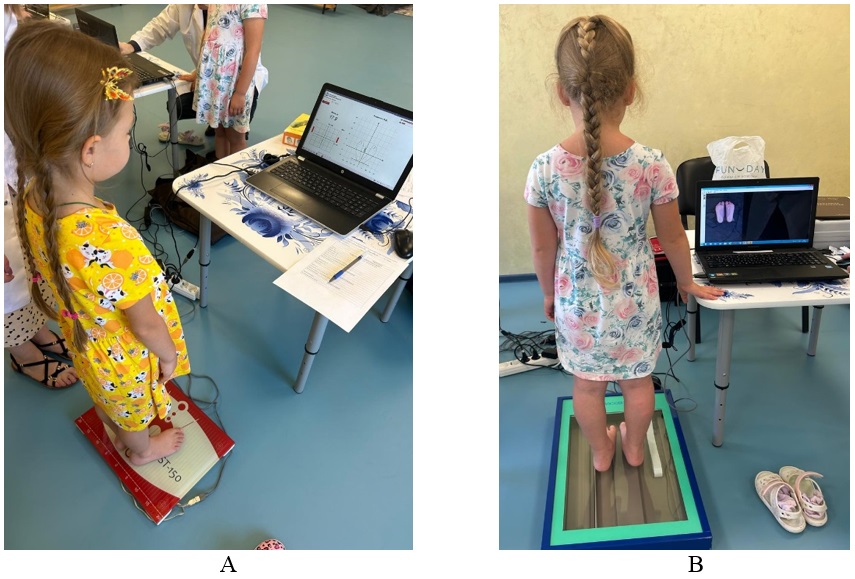
Fig. 2. А) Study on the ST-150 force platform, B) Study on the PODOSKAN – MBN device
The statistical data processing was carried out with the Statistica 13.0 software. We calculated standard descriptive statistics indices (median, 1st and 2nd quartiles). The indices were compared using the Wilcoxon’s signed rank test. The difference deemed statistically significant when p<0.05.
Results and discussion. Analysis of the heart rate variability (HRV) indices associated with total functional status and adaptive reserves before and after the HT and health physical culture course (table 1) has shown, that all the values remained within the physiological norm. However, after the course we have found increased heart rate (HR), reduced power of high-frequency waves and mean square deviation of R-R intervals. Such changes may be associated with an increased stress in the children, which was caused by novelty of surroundings and interventions.
Table 1
Heart rate variability of preschool children before and after the course
|
№ |
Indices |
Before |
After |
P< |
|
1 |
HR, beats/min |
98.9 (93; 109.1) |
106 (92; 109) |
- |
|
2 |
HF, % |
31.7 (30.2; 34.8) |
25.1 (21; 27.1) |
0.009 |
|
3 |
LF, % |
32.65 (30.2; 56.3) |
47.9 (27.8; 51) |
- |
|
4 |
LF/HF |
1.05 (0.8; 1.6) |
2.1 (1; 2.2) |
0.02 |
|
5 |
VLF, % |
28.96 (13.48; 38.02) |
31.58 (26.23; 44.88) |
- |
|
6 |
Stress index, c.u. |
161.5 (118.1; 256.2) |
188.25 (128; 232.9) |
- |
|
7 |
SDNN, ms |
48.4 (43.8; 56.4) |
37.25 (33.9; 49.6) |
0.02 |
Note: HR – heart rate; HF – power of high-frequency waves; LF – power of low-frequency waves; VLF – power of very-low-frequency waves; SDNN – mean square deviation of N-N intervals
Analysis of the cardiovascular system parameters has shown that the examined indices of central hemodynamics, i.e. stiffness index, retraction index, augmentation index, peripheral vascular resistance, volumetric blood flow, systolic and diastolic blood pressure remained within the physiological norm, and after the course we have registered a decrease in systolic blood pressure and peripheral vascular resistance (table 2).
After the course, functional capabilities of the external respiration system also improved: vital capacity of the lungs increased (fig. 3).
Table 2
Cardiovascular system indices of preschool children before and after the course
|
№ |
Indices |
Before |
After |
P< |
|
1 |
Stiffness index, m/s |
4.4 (4.06; 4.78) |
4.12 (4; 4.37) |
- |
|
2 |
Retraction index, % |
30 (25; 30) |
27.5 (25; 30) |
- |
|
3 |
Augmentation index, c.u. |
1.03 (0.95; 1.1) |
1.1 (0.95; 1.1) |
- |
|
4 |
PVR, MPa*c/m³ |
1816.5 (1678.4; 1970.4) |
1581.7 (1508.8; 2608.7) |
- |
|
5 |
Cardiac output, l/min |
3.55 (3.4; 3.7) |
3.6 (2.5; 3.8) |
- |
|
6 |
CI, l/min/m2 |
4.4 (4.1; 4.6) |
4.35 (2.8; 5.1) |
- |
|
7 |
meanBP, mm Hg |
78.5 (71.3; 88.7) |
71.7 (70; 74.7) |
- |
|
9 |
sBP, mm Hg |
106 (97; 112) |
93 (90; 96) |
0.005 |
|
10 |
dBP, mm Hg |
67 (55; 77) |
62 (60; 65) |
- |
Note: PVR – peripheral vascular resistance; meanBP – mean blood pressure; CI – volumetric blood flow; sBP – systolic blood pressure; dBP– diastolic blood pressure
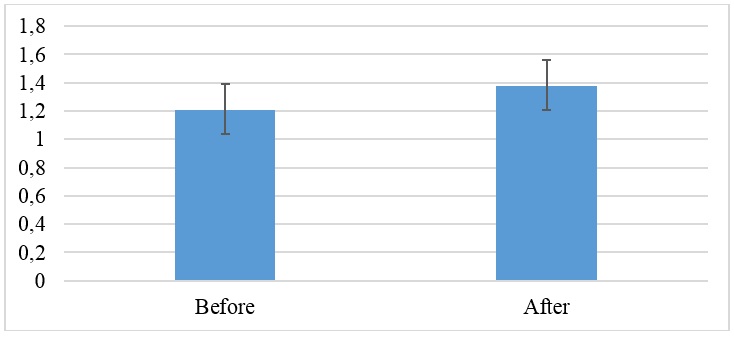
Fig. 3. Vital capacity of the lungs in preschool children before and after the course, l
Therefore, the effect was manifested in a decreased vascular tone and improved functional capabilities of the external respiration system.
Comparison of body mass composition using bioimpedance measurement has shown that after the course children had lost some weight, had increased body mass index and total body water (table 3). Also parameters of physical development have improved: left and right wrist length, flexibility (seated forward bend) and speed-strength qualities (standing long jump) (table 4).
In terms of stabilometry parameters, slight changes were registered: statokinesiogram length, mean velocity of the total pressure center, mean X-axis pressure center position (in the frontal plane), mean square deviation of the X-axis pressure center position and mean square deviation of the Y-axis pressure center position decreased, but mean Y-axis pressure center position increased (table 5). Plantographic foot assessment showed minor flat feet in almost all children (grade 1 flat feet) participating in the study. Plantographic indicators: Godunov foot score and hallux valgus angle did not change significantly, which is probably due to the short duration of the course.
Table 3
Body composition indices of preschool children before and after the course
|
№ |
Indices |
Before |
After |
P< |
|
1 |
Fat-free mass, kg |
17.55 (16.8; 19.3) |
17.5 (16.9; 20.1) |
- |
|
2 |
Fat mass, kg |
15.9 (7.1; 17) |
13.5 (5.9; 17) |
0.01 |
|
3 |
Total body water, % |
61.55 (60.8; 68) |
65.5 (60.8; 68.9) |
0.01 |
|
4 |
Body mass index, c.u. |
25.65 (25.3; 28.3) |
27.3 (25.3; 28.7) |
0.01 |
|
5 |
Muscle mass, kg |
15.95 (15.1; 16.5) |
15.7 (14.3; 16.2) |
0.01 |
|
6 |
Phase angle, ° |
6.7 (6.7; 7) |
6.6 (6.4; 7) |
- |
Table 4
Physical development indices of preschool children before and after the course
|
№ |
Indices |
Before |
After |
P< |
|
1 |
Standing long jump, cm |
116.5 (101; 124) |
119.5 (108; 128) |
0.005 |
|
2 |
Seated forward bend, cm |
4.5 (2; 6) |
5 (4; 6) |
- |
|
3 |
Right hand dynamometry, kg |
7.9 (6.5; 8.7) |
8.95 (8.8; 9.8) |
0.005 |
|
4 |
Left hand dynamometry, kg |
7.05 (6.2; 7.3) |
7.65 (6.8; 8.7) |
0.01 |
Table 5
Stabilometry indices of preschool children before and after the course
|
№ |
Indices |
Before |
After |
P< |
|
1 |
L, mm |
582.35 (507.3; 631.7) |
513.5 (376.5; 731.3) |
- |
|
2 |
V, mm/s |
19.4 (16.9; 21.1) |
17.15 (12.5; 24.3) |
- |
|
3 |
S, mm ² |
442.25 (289.6; 1106.2) |
495.45 (304.8; 1186.4) |
- |
|
4 |
X, mm |
0.25 (-2.4; 1.3) |
-5.15 (-6.3; -3.2) |
0.01 |
|
5 |
Y, mm |
14.65 (5.5; 20.7) |
27.3 (20.7; 37.8) |
0.01 |
|
6 |
x, mm |
6.6 (5.9; 8.1) |
5.45 (5.1; 6.4) |
- |
|
7 |
y, mm |
6.1 (5.2; 10.1) |
5.75 (5.4; 13.1) |
- |
|
8 |
FX, Hz |
0.1 (0.1; 0.1) |
0.1 (0.1; 0.2) |
- |
|
9 |
FY, Hz |
0.1 (0.1; 0.2) |
0.1 (0.1; 0.2) |
- |
Note: L – statokinesiogram length; V – mean velocity of the total pressure center; S – statokinesiogram surface area; P – statokinesiogram power; X – mean X-axis pressure center position (frontal plane); Y – mean Y-axis pressure center position (sagittal plane); x – mean square deviation of the X-axis pressure center position; y – mean square deviation of the Y-axis pressure center position; FX – basic oscillation frequency along the X axis; FY – basic oscillation frequency along the X axis
Table 6
Plantography indices of preschool children before and after the course
|
Indices |
Indices |
Before |
Norm |
|
|
Godunov index, degree |
Left |
1 (1; 3) |
1 (1; 2) |
0 |
|
Right |
1 (1; 3) |
1 (1; 2) |
0 |
|
|
Hallux valgus angle, ° |
Left |
16 (15; 17) |
15 (11; 16) |
4±9 |
|
Right |
16 (15; 17) |
14.5 (7; 17) |
4±9 |
|
Therefore, effects of HT and health physical culture on the functional status of the musculoskeletal system of preschool children was shown in a decrease of fat mass component, improved physical development, i.e. flexibility and speed-strength qualities, as well as insignificant improvement of the balance function.
Conclusion. The conducted studies with HT and health physical culture on preschool children have shown a proven positive effect on the functional status of cardiovascular, respiratory systems, body mass composition and physical development of the children.
According to the results, after the course of health procedures very day for 2 weeks (10 sessions total) with recreation of a climate similar with one of a salt cave, and a set of exercises with orthopedic massage devices, we have registered the effect on the functional status of cardiovascular, respiratory systems and adaptive reserves of preschool children, which was manifested in a decreased vascular tone and improved capabilities of the external respiration.
Influence on the functional status of the musculoskeletal system of preschool children was shown in a decreased fat mass component, improved physical development, i.e. strength, flexibility and speed-strength qualities, as well as insignificant improvement of the balance function. Such changes were caused by an enhancement of mechanisms of muscle and vestibular coordination due to exercise on orthopedic massage devices.
The aforementioned changes were due to a combined application of HT and health physical culture, which thanks to comparant and potentiating effects have a general health-improving and therapeutic effect. It is especially helpful for children who get sick very often, since improvement of functional capabilities of body systems contributes to an increase of adaptive potential, prevention of possible illnesses and balanced morphofunctional development.
Conflict of interest. The authors declare no conflict of interest.
REFERENCES
- Preventive pediatrics. Guide for doctors. Baranov A.A., Namazova-Baranova L.C., ed. Moscow: Pediatr, 2015. 744 p. (in Russ.)
- Kuchma V.R., Zvezdina I.V., Zhigareva N.S. Medical-social aspects of health forming in children in junior school. Current Pediatrics, 2008, vol. 7, no. 4, pp. 9-12. (in Russ.)
- Konova O.M., Dmitrienko E.G., Dmitrienko T.G., Sakharova E.V., Mamedyarov A.M., Taybulatov N.I. Aromaphytobalneotherapy in treatment and prophylaxis of frequent respiratory infections in children with chronic and disabling diseases. Pediatric Pharmacology, 2016, vol. 13, no. 5, pp. 482-487. (in Russ.)
- Chervinskaya A.V., Konova O.M., Khan M.A. Halotherapy for prevention and medical rehabilitation in pediatric health care. Current Pediatrics, 2017, no. 16 (5), pp. 406-412. DOI: 10.15690/vsp.v16i5.1805. (in Russ.)
- Sanatorium-resort treatment: national guide. Razumov A.N., Staroduboc V.I., Ponomarenko G.N. Moscow: GEOTAR-Media, 2021. 752 p.
- Khan M.A., Ivanova I.I., Mikitchenko N.A., Dedyurina A.V., Lyan N.A. Halotherapy in the rehabilitation of children in educational institutions. Physiotherapist, 2020, no. 2, pp. 30-36. (in Russ.)
- Khan M.A., Liang N.A., Korchazhkina N.B., Chervinskaya A.V., Ivanova I.I. Halotherapy in pediatric practice. Physiotherapist, 2019, no. 6, 15-24. (in Russ.)
- Kopejkina T.E. Health physical culture for preschool children: learning guide. Arkhangelsk: SAFU, 2019. 102 p. (in Russ.)
- Tychinina A.P., Koryagina Yu.V., Akimkina O.N. Comparative and structural analysis of physical development indices of girls of the first and second childhood. Russian Journal of Sports Science: Medicine, Physiology, Training, 2024, 3, no. 1. Available at: https://intsport.ru/en/journal-issues/2024-1e/tychinina2024e (accessed 03.06.2024)
INFORMATION ABOUT THE AUTHORS:
Aleksandra P. Tychinina – Researcher of the Center of Biomedical Technologies, FSBI “North-Caucasian Federal Research-Clinical Center of Federal Medical and Biological Agency”, Essentuki, e-mail:
Yulia V. Koryagina – Doctor of Biological Sciences, Professor, Head of the Center of Biomedical Technologies, FSBI “North-Caucasian Federal Research-Clinical Center of Federal Medical and Biological Agency”, Essentuki, e-mail:
Viktoria V. Korneva – Junior Researcher of the Center of Biomedical Technologies, FSBI “North-Caucasian Federal Research-Clinical Center of Federal Medical and Biological Agency”, Essentuki, e-mail:
Oxana N. Akimkina – Junior Researcher of the Center of Biomedical Technologies, FSBI “North-Caucasian Federal Research-Clinical Center of Federal Medical and Biological Agency”, Essentuki, e-mail:
For citation: Tychinina A.P., Koryagina Yu.V., Korneva V.V., Akimkina O.N. Effect of halotherapy and health physical culture on physical development of preschool children. Russian Journal of Sports Science: Medicine, Physiology, Training, 2024, vol. 3, no. 3(11). DOI: 10.24412/2782-6570-2024_03_03_2