


Download the article in pdf format
Publication date: 15.03.2025
DOI: 10.24412/2782-6570-2025_04_01_3
UDC 615.838
LANDSCAPE AND CLIMATIC POTENTIAL OF PYATIGORSK AS A FACTOR ENSURING EFFICIENCY OF SANATORIUM-RESORT TREATMENT, TOURISM AND RECREATION
Yu.V. Koryagina, A.P. Tychinina, V.V. Korneva, O.N. Akimkina
FSBI “North-Caucasian Federal Research-Clinical Center of Federal Medical and Biological Agency”, Essentuki, Russia
Abstract. The article is dedicated to a comprehensive study of landscape and climatic potential of Pyatigorsk using the example of microclimate indices of the S.M. Kirov Sanatorium, the Pyatigorsk Clinic and the Rodnik Sanatorium territory. Materials for the research included guiding documents, GOSTs, state reports, scientific papers and results of traversing. The conducted analysis has shown that values of the microclimate indices range within the standard. High level of light negative air ions and oxygen content, humidity, low level of carbon dioxide gas and aerosol particles in the air of the studied area have a favorable effect on a human body. A large amount of vegetation on the territories of sanatoria and the city as a whole provide great opportunities for efficient sanatorium-resort treatment, tourism and recreation.
Keywords: Pyatigorsk, climate, landscape and climatic potential, bioclimate, sanatorium-resort treatment, tourism, recreation.
Introduction. Pyatigorsk is a federal balneological and mud cure resort located in the Caucasian Mineral Waters, Stavropol Krai. One of the main unique recreational resources of this area is climate [1].
Climate of Pyatigorsk is moderately continental, without rapid temperature rises. Winter is mild and warm, and summer is hot and sunny with a smooth shift into dry and warm autumn. In Pyatigorsk sanatoriums, climate therapy (air therapy, terrain cure therapy, landscape therapy) comes into use thanks to such climate [2]. Healing air combined with therapeutic walking have a positive effect on general health improvement of the body [3].
Mountains and forest ensure a special microclimate suitable for recreation, therapy and health-improving physical culture at any time of year [4]. In addition, a great number of mineral water springs are located on the city’s territory [5]. All of it attracts many tourists for sanatorium-resort treatment and recreation.
Study of the climatic potential of Pyatigorsk is relevant due to the preparation and issuance of special medical assessments in accordance with the requirements of the Russian Federation Government Decree № 681 dated 27.05.2024 “On preparation and issuance of special medical assessments”. It also allows us to estimate the therapeutic and health-improving potential of the Caucasian Mineral Waters resort [6, 7].
Objective of the study – to identify the specific features of the landscape and climatic potential of the Pyatigorsk resort that ensure the effectiveness of sanatorium-resort treatment, tourism and recreation.
Methods and organization. Researchers of the Center of Biomedical Technologies (North-Caucasian Federal Research-Clinical Center of Federal Medical and Biological Agency) have conducted a study to identify the following microclimate parameters: air temperature, humidity and pressure, gamma-ray level of radiation pollution; aerosol particle (8 gradations in the range from 0.2 to 10 µm), oxygen and carbon dioxide content in the atmosphere (at the respiratory level of 1.5 m); positive and negative light air ion concentration on the S.M. Kirov Sanatorium, the Pyatigorsk Clinic and the Rodnik Sanatorium territories located in the Pyatigorsk resort zone, on the hillside of Mashuk.
The study materials included guiding documents, GOSTs, state reports, scientific papers and results of traversing.
The following devices were used: MAC-01 light-sized air ion counter, RadiaSkan-801 radiation dosimeter, SAChM 4801-01 aerosol analyzer (a mobile version), DT-1309 light meter, IKV-8 air quality monitor.
Table
Mean values of microclimate indices in the Pyatigorsk sanatoriums
|
№ |
Microclimate indices |
||||||
|
Т, °С |
RH, % |
AP, hPA |
О2, % |
СО2, ppm |
∑ [(N-)+(N+)] /IUC, background |
О/T, Klux |
|
|
S.M. Kirov Sanatorium |
28.1 |
42.42 |
700.4 |
20.7 |
402.8 |
1318/0.84 |
23.76/7.34 |
|
Pyatigorsk Clinic |
28.0 |
46.1 |
702.3 |
20.8 |
399.9 |
955/0.85 |
23.87/6.70 |
|
Rodnik Sanatorium |
28.8 |
38.68 |
702.6 |
20.7 |
421.3 |
1074/0.76 |
23.99/10.4 |
Note: Т, °С – air temperature; RH, % – relative humidity; AP, hPa – air pressure; О2, % – relative oxygen content in the surface atmosphere; СО2, ppm, number of units/million – relative carbon dioxide content in the surface atmosphere; ∑[(-) + (+)] / IUC (ion unipolarity coefficient) – air ionization background, ion/cm3; О/T – luminance (Klux), in the open (О), and under the tree crown (T).
Results and discussion. Measurements of microclimate indices were done in different sports on each sanatorium’s territory. The mean values are presented in a table below.
The geographic location of Pyatigorsk defines a variety of landscape types – from mountain ridges to steppe plains. Pyatigorsk is situated at the junction of several natural zones – the foothills of the Caucasus, the Stavropol Upland and the Kuma-Manych Depression.
Climate of Pyatigorsk is moderately continental, with hot, dry summer and mild, dry winter. Average temperature in July – +22-24°C (average temperature in July in 2024 exceeded the climatic standard, which is due to the research being conducted during the hottest months – July-August), in January – about -3-4°C.
Total precipitation – 500-600 mm per year in average, with most of it falling in spring and summer.
One of the climate’s features is high solar activity throughout the most part of the year, which makes Pyatigorsk attractive for resort recreation.
High air purity in the resort zone is described with low carbon dioxide content (399.9-421.3 units/million) in relation to the standard values (up to 450 units/million), high oxygen content (20.7-20.8%), the presence of volatile metabolites and high air ionization (955-1318).
The territory also possesses rich vegetation: common oak (Quércus róbur), common maple (Acer platanoides L.), common ash (Fráxinus excélsior), common lime (Tilia europaea), beech (Fagus sylvatica), hornbeam (Cárpinus bétulus), blue spruce (Pīcea pūngens), common spruce (Pícea ábies) etc.
Coniferous plants growing on the slope of Mashuk are noted for their high phytoncidal properties, which have a positive effect on the respiratory and nervous systems, and their ability to produce useful volatile organic compounds (VOCs), possessing therapeutic and health-improving properties that contribute to maintaining a high level of purity of the air basin, its “freshness”, increased bacteriostasis, formation of favorable conditions for the organization of climate therapy, landscape therapy, outdoor recreation.
The level of aerosol particles of the surface atmosphere in the size range from 0.2 to 10 µm is considered an equally important indicator of air purity. This index varied from 65825 to 90097 particles/l in Pyatigorsk (fig. 1).
The biologically significant aerosol level in the size range of particles from 0.5 to 1 µm exceeded the standard in the Pyatigorsk Clinic, where the main part of the territory is located along the busy roadway of the resort area. The lowest value of ultradisperse aerosol (2580 particles/l) was observed in the territory of the S.M. Kirov Sanatorium (fig. 2).
The radiation and ecological survey has shown that the ambient equivalent dose rate (ADER) power was within the normal range (0.5 µSv/h) in all the territories (0.096-0.142 µSv/h), indicating no radiation pollution in Pyati-
gorsk (fig. 3).
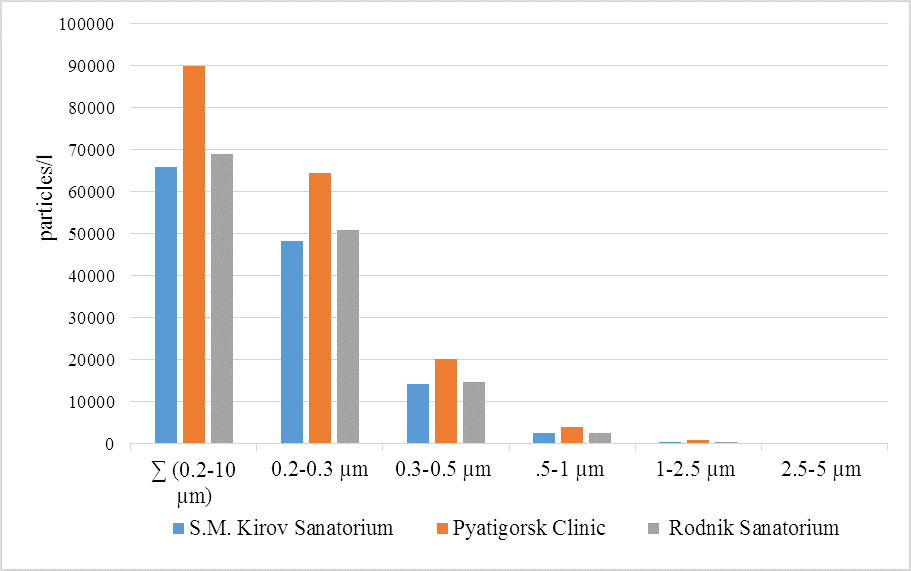
Fig. 1. Aerosol pollution in the Pyatigorsk sanatoriums
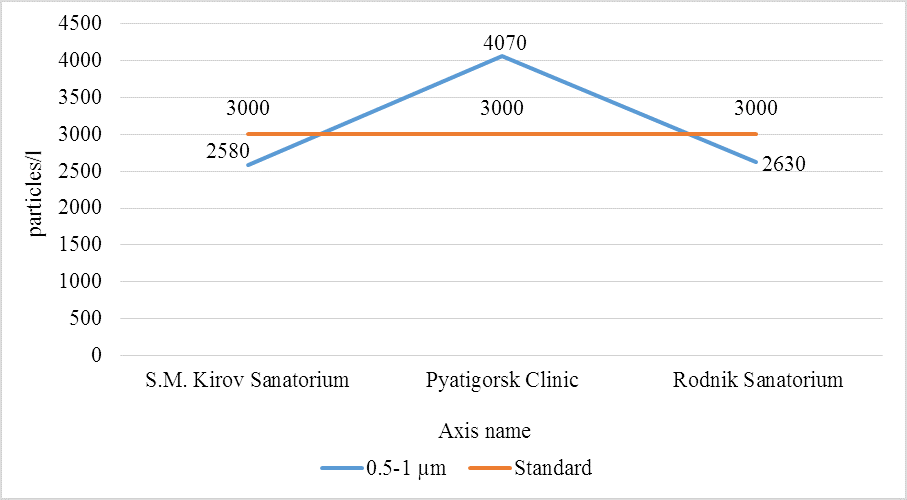
Fig. 2. Pollution of the surface atmosphere by aerosol particles (size range – from 0.5 to 1 μm) in the Pyatigorsk sanatoriums
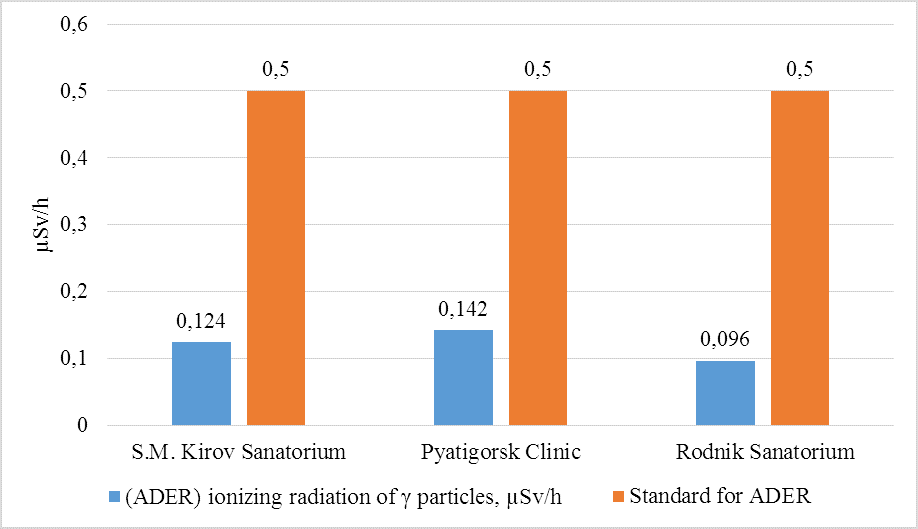
Fig. 3. Radiation pollution level in the Pyatigorsk sanatoriums
Conclusion. Landscape and recreational potential of the S.M. Kirov Sanatorium, the Pyatigorsk Clinic and the Rodnik Sanatorium territories is estimated as high according to the module technology accepted in balneology – 1.9 points (out of 3 possible) – and corresponds with the 1st rank.
Values of microclimate indices remain within the standard values and ensure favorable conditions for arranging heliotherapy, air therapy, climate therapy, terrain cure therapy and health-improving physical culture [8].
Patients undergoing sanatorium-resort treatment are recommended to walk on the territories of the sanatoriums and terrain cure routes located on Mashuk and in the resort area of Pyatigorsk.
The saturation of the surface atmosphere with oxygen and light negative air ions allows not only in summer, but also throughout the year to carry out recreating activities in the fresh air [8]. Physical activity provides improvement of metabolism and reduction of nervous system excitability, and staying outdoors accelerates metabolic processes in the body, strengthens blood vessels, improves heart function, excites brain activity, increasing the overall tone of the body [9].
Conflict of interest. The authors declare no conflict of interest.
REFERENCES
- Povolotskaya N.P., Efimenko N.V., Zherlitsina L.I., Kaysinova A.S., Kirilenko A.A., Kortunova Z.V., Prosolchenko A.V., Senik I.A., Slepykh V.V., Urvacheva E.E. Methodological approaches to estimation of bioclimate and landscape resort-recreational potential. Resort Medicine, 2017, no. 1, pp. 2–10. Available at: https://www.elibrary.ru/item.asp? edn=yznfkh (accessed 27.11.2024) (in Russ.)
- Weather and climate: weather log. Online data portal “Pogoda i klimat”. Available at: http://www.pogodaiklimat.ru/ (accessed 27.11.2024) (in Russ.)
- Reps R.F. The biological effects of natural healing factors and their modification. Modern Issues of Biomedicine, 2019, vol. 3, no. 2. Available at: https://svbskfmba.ru/arkhiv-nomerov/2019-2/reps-v-f (accessed 27.11.2024) (in Russ.)
- Povolotskaya N.P. Weather classification and assessment of human thermal state during climate therapy and recreation in the Caucasian Mineral Waters. Issues of medical climatology and climate therapy of patients at resorts. Pyatigorsk: Pyarigorsk Research Institute of Balneology and Physiotherapy, 1975. pp. 16–23. (in Russ.)
- Slepykh V.V. Phytoncidal and ionizing properties of forest vegetation. Kislovodsk, 2009. 180 p. (in Russ.)
- Koryagina Yu.V., Donets E.V., Efimenko N.V., Ter-Akopov G.N., Tychinina A.P., Nopin S.V., Popov A.N., Kirilenko A.A. Analysis of Climatic (according to Observations in 1993–2023) and Microbioclimatic Health-improving Potential of Kislovodsk. Meteorologiya i gidrologiya, 2024, 2, pp. 131–138. (in Russ.)
- Nopina V.S., Tychinina A.P., Akimkina O.N. Bioclimatic, landscape and recreational potential of Zheleznovodsk from the point of health physical culture. Russian Journal of Sports Science: Medicine, Physiology, Training, 2024, vol. 3, no. 3(11). DOI: 10.24412/2782-6570-2024_03_03_4
- Balneology of the Caucasian Mineral Waters: in 2 volumes. Volume. 1. V.V. Ujba, ed. Pyatigorsk: Pyarigorsk State Research Institute of Balneology, 2009. 333 p. (in Russ.)
- Ujba V.V. Balneology of the Caucasian Mineral Waters: in 2 volumes. Volume. 2. Pyatigorsk: Pyarigorsk State Research Institute of Balneology, 2011. 368 p. (in Russ.)
INFORMATION ABOUT THE AUTHORS:
Yulia V. Koryagina – Doctor of Biological Sciences, Professor, Head of the Center of Biomedical Technologies, FSBI “North-Caucasian Federal Research-Clinical Center of Federal Medical and Biological Agency”, Essentuki, e-mail:
Aleksandra P. Tychinina – Researcher of the Center of Biomedical Technologies, FSBI “North-Caucasian Federal Research-Clinical Center of Federal Medical and Biological Agency”, Essentuki, e-mail:
Viktoria V. Korneva – Junior Researcher of the Center of Biomedical Technologies, FSBI “North-Caucasian Federal Research-Clinical Center of Federal Medical and Biological Agency”, Essentuki, e-mail:
Oxana N. Akimkina – Junior Researcher of the Center of Biomedical Technologies, FSBI “North-Caucasian Federal Research-Clinical Center of Federal Medical and Biological Agency”, Essentuki, e-mail:
For citation: Koryagina Yu.V., Tychinina A.P., Korneva V.V., Akimkina O.N. Landscape and climatic potential of Pyatigorsk as a factor ensuring efficiency of sanatorium-resort treatment, tourism and recreation. Russian Journal of Sports Science: Medicine, Physiology, Training, 2025, vol. 4, no. 1(13). DOI: 10.24412/2782-6570-2025_04_01_3